Showing posts with label Cool. Show all posts

Monday, November 9, 2015

Cool Turning Components pictures

A couple of nice turning parts photos I found:


right here are some berries I made for skynet to make it feel far better for starting globe war iii

Image by harold.lloyd

So SKYNET got all mad because it got hacked from China and now China will get all mad back and people will point and say angry items and frown and sooner or later the computers will take more than and bomb us all to bits until John Connor requires more than and SKYNET is destroyed. Till then? Please take pleasure in the berries.


Boom! go the berries. Boom!


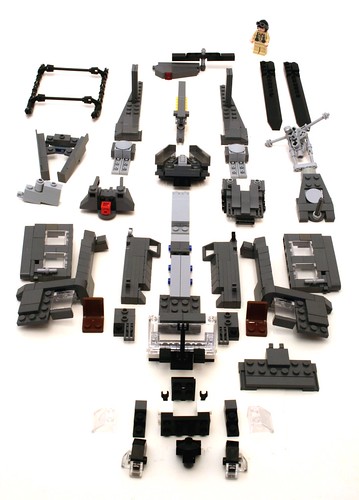
Anatomy of a huey

Image by psiaki

full breakdown pics rolling out in the next handful of days. I didn’t mean to &quotadvertise&quot this, but after I was completed taking it apart I could resist taking this image and I thought it turned out quite good.


for any questioning, it tends to make this helicopter when put together….correctly.


EDIT: see comprehensive breakdown pics here

Monday, November 2, 2015

Cool Edm Solutions pictures

Some cool edm services photos:


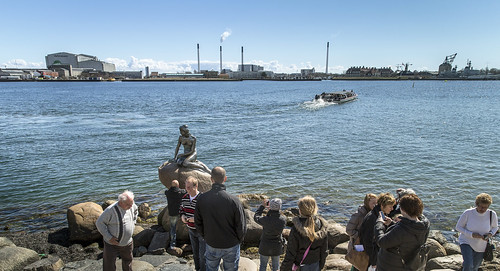
The small mermaid and Refshaleoen Copenhagen 20130420_007

Image by News Oresund

Den lille havfrue i Københavns havn i förgrunden (forground the little mermaid, Copenhagen harbour). I bakgrunden till vänster syns Refshaleøen som ska för vandlas till Eurovision Island (background to the left: Refshaleøen).

Refshaleøen, Copenhagen harbour, Eurovision Island 2014 – Eurovision Song Contest.

Wikipedia: On 2 September 2013, Danmarks Radio (DR) announced that the Eurovision Song Contest 2014 will take place at B&ampW Hallerne. The surrounding location will be transformed into Eurovision Island, an Olympic Park style complicated which will home amenities and the Press Centre for the entirety of the contest.[6]

Refshaleøen, originally an island in its own proper but now annexed to the larger island of Amager, is a former industrial web site in the harbor of Copenhagen, Denmark. For much more than a hundred years, it was residence to the shipyard Burmeister &amp Wain which closed in 1996.

Refshaleøen is often utilised as a venue for events and festivals. In 2013, I 2013 the area played host to the heavy metal festival Copenhell, the electronic music festival EDM 2013, Scandinavian Reggae Festival, MAD Food Symposium (element of Copenhagen Cooking), Refshalen Music Festival and Asteroiden theatre festival.

Site surface region is approx. 500,000 sqm. Given that the shipyard’s bankruptcy in 1996, the region has undergone substantial adjustments. The abandoned buildings are now property to a mixture of inventive entrepreneurs, tiny craft, flea markets, storage facilities and cultural and recreational makes use of.

The residents incorporate Asterions Husm a theatre, AMASS,[three] a restaurant opened by Mathew Orlando, former head chef at Noma,[4] the art gallery YARD and the inventive neighborhood Skabelonloftet.[five]

Since April 2011 there are once again both at the old shipyard. Copenhagen Yacht Solutions has opened the first Danish Yacht garage on the island – an indoor Marina for motorboats on the American model..[2]

The private spaceflight company Copenhagen Suborbitals operates on Refshaleøen.


Photo: News Øresund – Johan Wessman

© News Øresund

Detta verk av News Øresund är licensierat below en Creative Commons Erkännande three. Unported-licens (CC BY 3.). Bilden får fritt publiceras beneath förutsättning att källa anges (Foto: News Øresund + fotografnamn).

The picture can be employed freely beneath the prerequisite that the source is provided .

News Øresund, Malmö, Sweden.

&lta href=&quothttp://www.newsoresund.org&quot rel=&quotnofollow&quot&gtwww.newsoresund.org&lt/a&gt.

News Øresund är en oberoende regional nyhetsbyrå som ingår i projektet Øresund Media Platform som drivs av Øresundsinstituttet i partnerskap med Lunds universitet och Roskilde Universitet och med delfinansiering från EU (Interreg IV A Öresund) och 14 regionala icke kommersiella aktörer.


APO Nationals 2008 – CRC project

Image by jtu


Scouts lined up

Image by stepol

Wednesday, October 28, 2015

Cool Edm Solutions images

Verify out these edm solutions pictures:


APO Nationals 2008 – CRC project

Image by jtu


The tiny mermaid and Refshaleoen Copenhagen 20130420_007

Image by News Oresund

Den lille havfrue i Københavns havn i förgrunden (forground the tiny mermaid, Copenhagen harbour). I bakgrunden till vänster syns Refshaleøen som ska för vandlas till Eurovision Island (background to the left: Refshaleøen).

Refshaleøen, Copenhagen harbour, Eurovision Island 2014 – Eurovision Song Contest.

Wikipedia: On 2 September 2013, Danmarks Radio (DR) announced that the Eurovision Song Contest 2014 will take spot at B&ampW Hallerne. The surrounding location will be transformed into Eurovision Island, an Olympic Park style complex which will property amenities and the Press Centre for the entirety of the contest.[six]

Refshaleøen, initially an island in its personal right but now annexed to the bigger island of Amager, is a former industrial web site in the harbor of Copenhagen, Denmark. For more than a hundred years, it was residence to the shipyard Burmeister &amp Wain which closed in 1996.

Refshaleøen is often utilised as a venue for events and festivals. In 2013, I 2013 the location played host to the heavy metal festival Copenhell, the electronic music festival EDM 2013, Scandinavian Reggae Festival, MAD Food Symposium (part of Copenhagen Cooking), Refshalen Music Festival and Asteroiden theatre festival.

Website surface area is approx. 500,000 sqm. Considering that the shipyard’s bankruptcy in 1996, the region has undergone significant alterations. The abandoned buildings are now residence to a mixture of inventive entrepreneurs, modest craft, flea markets, storage facilities and cultural and recreational utilizes.

The residents consist of Asterions Husm a theatre, AMASS,[3] a restaurant opened by Mathew Orlando, former head chef at Noma,[4] the art gallery YARD and the creative neighborhood Skabelonloftet.[five]

Given that April 2011 there are again each at the old shipyard. Copenhagen Yacht Services has opened the very first Danish Yacht garage on the island – an indoor Marina for motorboats on the American model..[two]

The private spaceflight firm Copenhagen Suborbitals operates on Refshaleøen.


Photo: News Øresund – Johan Wessman

© News Øresund

Detta verk av News Øresund är licensierat below en Creative Commons Erkännande 3. Unported-licens (CC BY three.). Bilden får fritt publiceras under förutsättning att källa anges (Foto: News Øresund + fotografnamn).

The image can be employed freely beneath the prerequisite that the supply is provided .

News Øresund, Malmö, Sweden.

&lta href=&quothttp://www.newsoresund.org&quot rel=&quotnofollow&quot&gtwww.newsoresund.org&lt/a&gt.

News Øresund är en oberoende regional nyhetsbyrå som ingår i projektet Øresund Media Platform som drivs av Øresundsinstituttet i partnerskap med Lunds universitet och Roskilde Universitet och med delfinansiering från EU (Interreg IV A Öresund) och 14 regionala icke kommersiella aktörer.


Scouts lined up

Image by stepol

Tuesday, October 27, 2015

Cool Precision Turning And Machining pictures

A handful of good precision turning and machining pictures I identified:


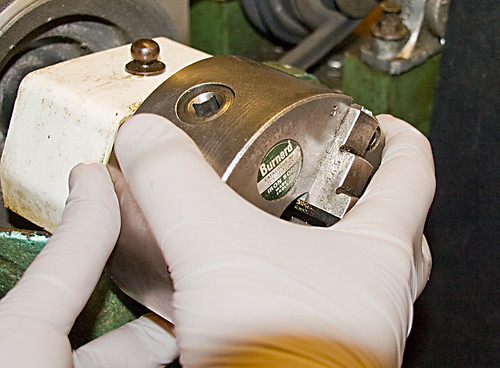
Unscrewing the Chuck

Image by tudedude

Very carefully unscrewing the 3 jaw chuck counter clockwise


Additional info at:


www.tudedude.co.uk/workshop/Lathe/3 Jaw Chuck.html

Cool Machining Suppliers pictures

Verify out these machining suppliers photos:


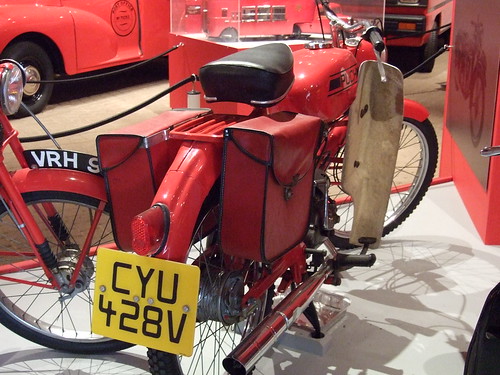
Puch MV50 Steyr Daimler moped (1980)

Image by British Postal Museum & Archive

In the 1970s, the bigger suppliers of motorcycles to the Post Office steadily gave way to other makes such as Puch, Honda and Kawasaki.


Puch mopeds have been used in little numbers for each Telegram and letter delivery operate. Its small size created it most suitable for low volume deliveries in towns and rural locations.


The machine on show was used at the Northern District Office, London (primarily based at Finsbury Park).


For far more info on this exhibition please go to our website


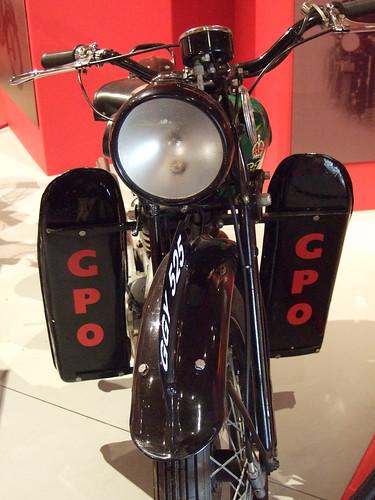
BSA C10

Image by British Postal Museum & Archive

Following Planet War I the Post Workplace started to obtain the more effective motorcycles then offered. The commence of the 1920s was the starting of The Post Office’s motor transport scheme, during which it bought Matchless, Triumph, Enfield, Douglas, Clyno and Chater Lea motorcycles. 1 of the biggest suppliers of machines to the Post Workplace was BSA.


Combination machines (with sidecars), although much more costly to operate had been frequently utilized each for delivery and collection function. Regardless of this, solo machines such as the BSA C10 were ideally suited for the solo delivery of mail and for telegram function.


This machine is one of the couple of wartime purchases created by the Post Workplace. The continuation of an efficient mail service in the course of the war years was important both as a indicates of communication and to boost morale. In the course of Globe War II this motorcycle would have been fitted with a hooded headlight to conform to wartime blackout regulations.


For much more info on this exhibition please check out our web site


FLOOR CLEANING MACHINE – Supplies of floors cleaning machine (flooring) at Pulire 2013

Image by КИИТ

Suppliers of floor cleaning machine and sweppers. Mach is synonymous with producing high quality firm specializing in rental and sale of motorized ideal according to your particular wants. PULIRE 2013 – это международная выставка машин, клинингового оборудования, изделий и систем для индустриальной очистки и клининга. В английской версии – International Exhibition of Machines, Equipments, Merchandise and Systems for Industrial Cleaning. Уборочная техника и оборудование для клининга от ведущих мировых производителей KARCHER, LAVORPRO, FIMAP, COMAC, COLUMBUS. Мы являемся официальными дилерами и дистрибьюторами COMAC в России, FIMAP (Италия), LAVORPRO (Италия). Специальные предложения для клининговых компаний мы осуществляем сервис, ремонт, поставляем запчасти и расходники следующих производителей: Fimap, Kаrcher, COMAC, HAKO, Nilfisk, IPC, Lavor PRO, Columbus, Delvir, Cleanfix, Taski, Tennant Мы работаем по всей России: Москва, Санкт-Петербург, Новосибирск, Екатеринбург, Нижний Новгород, Самара, Омск, Казань, Челябинск, Ростов-на-Дону, Уфа, Волгоград, Пермь, Красноярск, Саратов, Воронеж, Краснодар, Тольятти, Барнаул, Ижевск, Ульяновск, Ярославль, Владивосток, Иркутск, Хабаровск, Новокузнецк, Тюмень, Оренбург, Кемерово, Рязань, Пенза, Тула, Набережные Челны, Астрахань и др. города России. Узнай больше www.kiit.ru/uborochnaya-texnika-i-oborudovanie.html# на сайте ЗАО &quotКомпания инноваций и технологий&quot

Sunday, October 11, 2015

Cool Edm Cutting pictures

Some cool edm cutting photos:


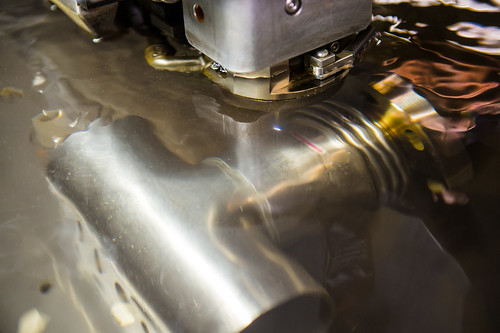
Below water cutting

Image by Argonne National Laboratory

The EDM machine cutting a piece.


Photo courtesy Argonne National Laboratory.


30180D50

Saturday, October 3, 2015

Cool Vertical Grinding pictures

Some cool vertical grinding photos:


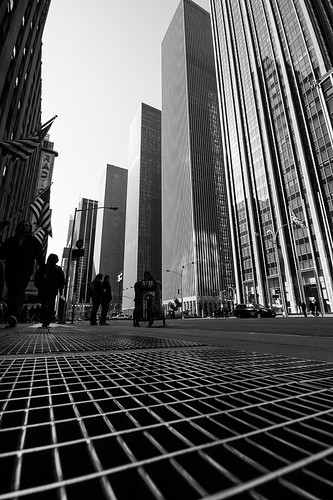
1251 Avenue of the Americas – on the ground, par Franck Vervial

Image by Franck Vervial

New York 2012


&quotLa photo n’est autre qu’un état d’oisiveté et de contemplation intenses qui aboutit à un bon cliché noir et blanc.&quot — Elliott Erwitt


Windmill-soybeans-corn-fields-DSC_7788.jpg

Image by ecfman


DSC_7788 Processed

Image by ecfman

Wednesday, September 30, 2015

Monday, September 28, 2015

Cool Grinding Surface images

A couple of good grinding surface pictures I located:


2010_0704 – Road Textures_four

Image by HoskingIndustries

Cost-free higher-resolution texture pictures of road surfaces in different states of decay, including painted lines, cracks and spills.

Cost-free for private and industrial use, nonetheless resale or repackaging is prohibited.
www.hoskingindustries.com.au

Sunday, September 20, 2015

Cool Od Grinding photos

Some cool od grinding images:


The Excellent Obelisk, Axum

Image by A.Davey

These are the remains of the &quotGreat Obelisk&quot at Axum in northern Ethiopia. Believed to be the largest object ever carved from a single piece of rock, the Great Stella is believed to have collapsed and shattered as it was being raised in antiquity. It was over 108 feet tall!


I wonder who explained it to the boss . . . and regardless of whether the boss was present at the collapse.


Modern day Axum in Ethiopia is built on and around the remains of an ancient city, the former capital of the Axumite Kingdom.


The Axumite Kingdom had emerged as a regional energy by the second century of the current era.


Axum reached its peak among the third and sixth centuries of the present era. Most people do not know that Axum was one of the most effective kingdoms on earth for the duration of its hayday, primarily because of its handle of trade routes on sea and on land.


These days, the stelae, or obelisks, erected by Axumite kings are the most impressive remains of that ancient society.


The late archaeologist Stuart Munro-Hay wrote a fascinating description of the obelisks at Axum, including the a single pictured right here.


——————————————————

Without having doubt, Aksum’s most impressive remains are the royal tombs and their fabulous markers, the ‘stelae’ or obelisks. Even the plain examples are impressive, reduce from challenging neighborhood granite.


But truly staggering is a series of six carved examples. These look to depict the dead rulers’ palaces—their tombs lay beneath, and it was our good fortune to be the discoverers of this underground world. The stelae—or so we could conjecture—had been the stairways to heaven for the kings of Aksum. At the base are granite plates with carved wine-cups for offerings to the spirit of the deceased.


The biggest stela is undoubtedly amongst the largest single stones ever quarried by human labour. It testifies to the magnificent self-esteem of the unknown ruler who had it extracted and dragged several kilometres to its final web site, and to the talent and artistry of these who ready and decorated it.


More than thirty-3 metres tall, the stele represents a thirteen storey tower, with elaborate window-tracery, frames, lintels, beam-ends, even a door with a bolt. This monstrous stone quickly fell—maybe a couple of seconds after being levered upright—smashing onto the roof block of a tomb nearby.


This block (some 17 x 7 x 1.5 metres), was not broken, although the tomb underneath it was crushed, but the great stele separated into 3 pieces. The top was fully smashed by the impact.


Nearby is its biggest nonetheless-standing neighbour, twenty-seven metres tall.


Underneath this ‘stele field’ is an extraordinary series of tombs, the underground maze which we began in 1973-four to discover and clear.


On all sides tunnels open out—some dug by robbers. The ground right here contains fallen stelae, or their base-plates, that have slipped down from above, buried staircases, walls and walled platforms, shafts and other structures, as nicely as tomb chambers and their contents—skulls and bones, pottery, metal, and piles of other grave-goods.


Text copyright Stuart Munro-Hay 1998.


archaeology.about.com/od/ironage/ig/The-Royal-Tombs-of-Ak…


Preparing For Africa Day

Image by infomatique

Giant Loved ones Jigsaw-Creating with Trócaire


African Bazaar


To celebrate African families working with the organisation both overseas and in Ireland, Trócaire invites visitors to ‘Africa Day @ Iveagh Gardens’ to participate in entertaining jigsaw-generating activities. Trócaire’s space at the event will comprise a big jigsaw, made up of 11 pictures of different households, which includes:


* The families of African people who perform in the organisation’s overseas offices and their offices in Maynooth, Belfast and Cork.

* The families of Trócaire’s partners overseas.

* The households of folks their partners function with on the ground.


Visitors to the occasion will be invited to try their hand at placing this giant jigsaw collectively. Blank mini-jigsaws will also be offered, on which young visitors can draw their own families and – afterwards – bring their newly-designed jigsaws residence.


Stands detailing the stories of four of the families featured in the giant jigsaw – and their connection with Trócaire – will also be displayed.

Tuesday, August 25, 2015

Cool Prototype Manufacturing Firm pictures

Check out these prototype manufacturing organization photos:


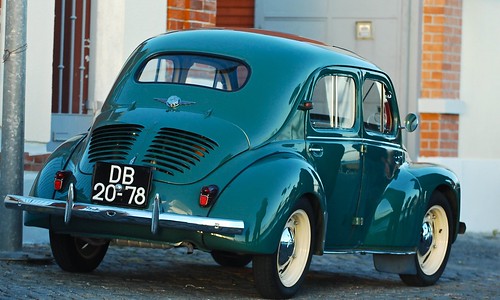
“Joaninha” (Renault four CV)


Image by pedrosimoes7

Oeiras, Portugal


in Wikipedia


The Renault 4CV is an economy vehicle created by the French manufacturer Renault from August 1947 to July 1961. As the first French automobile to sell over a million units, the 4CV was in the end superseded by the Renault Dauphine.


The 4CV was a four-door sedan of monocoque construction,[1] three.6 meters in length with rear suicide doors[three] and using Renault’s Ventoux engine in a rear-engine, rear-wheel drive layout.


The car’s name, 4CV, translates from the French for 4 cheveaux or 4 horse, especially four taxable horsepower.


To celebrate the fiftieth anniversary of the debut of the 4CV, in 1996 Renault presented a totally roadworthy concept car, the Renault Fiftie, with styling that recalled the 4CV, only in a two-door, mid-engine design and style.


Conception and history


The 4CV was originally conceived and designed covertly by Renault engineers throughout the German occupation of France in the course of Planet War II, when the manufacturer was under strict orders to design and create only industrial and military vehicles. A design group led by Fernand Picard, Charles-Edmond Serre and Jean-Auguste Riolfo envisioned a tiny, economical automobile appropriate for the economically tough years which would inevitably stick to the war.


The first prototype was completed in 1942 and two a lot more prototypes had been developed in the following 3 years. Pierre Lefaucheux tested the four CV prototype at Renault’s Herqueville estate.[four] The 4CV was ultimately presented to the public and media at the 1946 Paris Motor Show. The cars went on sale a year later.


In 1940 Louis Renault had directed his engineering team to &quotmake him a car like the Germans&quot. And until the arrangement was simplified in 1954, the 4CV featured a ‘dummy’ grill comprising six thin horizontal chrome strips, intended to distract focus from the similarity of the car’s all round architecture to that of the German Volkswagen,[1] whilst recalling the modern day designs of the fashionable front engined passenger vehicles produced in Detroit throughout the earlier 1940s.


An essential portion of the 4CV’s achievement, owes to the new methodologies employed in its manufacture, pioneered by Pierre Bézier. Bézier had begun his 42 year tenure at Renault as a Tool Setter, moving up to Tool Designer and then becoming head of the Tool Style Office. As Director of Production Engineering in 1949, he developed the transfer lines (or transfer machines) making most of the mechanical components for the 4CV.[5] The transfer machines were higher-functionality function tools designed to machine engine blocks. Even though imprisoned for the duration of WWII, Bézier created and enhanced on the automatic machine principle, introduced before the war by GM (Basic Motors). The new transfer station with several workstations and electromagnetic heads (antecedants to robots), enabled different operations on a single component to be consecutively performed by transferring the part from one particular station to another.


On the 4CV’s launch, it was nicknamed &quotLa motte de beurre&quot(the lump of butter) — due to the combination of its shape and the truth that early deliveries all utilized surplus paint from the German Army autos of Rommel’s Afrika-Corps, in a sand-yellow colour.[1] The 4CV was initially powered by a 760cc rear mounted four-cylinder engine coupled to a three-speed manual transmission. [7] In 1950 the 760cc unit was replaced by a 747cc version [7] of the &quotVentoux&quot engine creating 17 hp (13 kW).


In spite of an initial period of uncertainty and poor sales due to the ravaged state of the French economy, the 4CV had sold 37,000 units by mid-1949 and was the most well-known vehicle in France. The auto remained in production for much more than a decade afterwards. Claimed power output elevated subsequently to 21 hp (16 kW) as increased fuel octanes allowed for larger compression ratios, which along with the comparatively low weight of the vehicle (620 kg) enabled the companies to report an – 90 km/h (56 mph) time of 38 seconds and a prime speed barely beneath one hundred km/h (62 mph).[1] The engine was notable also for its elasticity, the second and prime gear both becoming usable for speeds between five km/h (three mph) and 100 km/h (62 mph): the absence of synchromesh on first gear would presumably have discouraged use of the bottom gear except when beginning from rest.


The rear mounting of the engine meant that the steering could be highly geared even though remaining reasonably light: in the early vehicles only 2¼ turns had been required from lock to lock.[1] The unusually direct steering no doubt delighted some keen drivers, but road tests of the time nonetheless included warnings to take great care with the car’s handling on wet roads.[1] In due course the makers switched from 1 intense to the other, and on later vehicles 4½ turns had been needed to turn the steering wheel from lock to lock.


The 4CV’s direct replacement was the Dauphine, launched in 1956, but the 4CV in fact remained in production until 1961. The 4CV was replaced by the Renault 4 which utilised the identical engine as the 4CV and sold for a similar cost.

Although most of the vehicles had been assembled at Renault’s Île Seguin plant located on an island in the river opposite Billancourt, the 4CV was also assembled in seven other countries, becoming Australia, Belgium, England, Ireland, Japan (where the Hino assembled examples gained a reputation for superior quality[1]), Spain and South Africa.[1] 1,105,543 vehicles were made the 4CV became the very first French vehicle to sell over a million.


The 4CV was easily modified and was utilized extensively as a racing auto. The 1st collaboration in between the Alpine business and Renault was the Alpine A-106 which was based on the 4CV. The partnership which would go on to win the Planet Rally Championship with the legendary Alpine A-110 in later years,


Renault four CV


Image by pedrosimoes7

Belem, Lisbon, Portugal


in Wikipedia


The Renault 4CV is an economy vehicle developed by the French manufacturer Renault from August 1947 to July 1961. As the very first French automobile to sell over a million units, the 4CV was eventually superseded by the Renault Dauphine.


The 4CV was a four-door sedan of monocoque construction,[1] 3.6 meters in length with rear suicide doors[3] and using Renault’s Ventoux engine in a rear-engine, rear-wheel drive layout.


The car’s name, 4CV, translates from the French for 4 cheveaux or 4 horse, particularly 4 taxable horsepower.


To celebrate the fiftieth anniversary of the debut of the 4CV, in 1996 Renault presented a totally roadworthy idea automobile, the Renault Fiftie, with styling that recalled the 4CV, only in a two-door, mid-engine style.


Conception and history


The 4CV was initially conceived and created covertly by Renault engineers for the duration of the German occupation of France for the duration of Planet War II, when the manufacturer was beneath strict orders to design and style and produce only commercial and military cars. A design and style team led by Fernand Picard, Charles-Edmond Serre and Jean-Auguste Riolfo envisioned a little, economical car appropriate for the economically difficult years which would inevitably adhere to the war.


The initial prototype was completed in 1942 and two far more prototypes had been created in the following three years. Pierre Lefaucheux tested the four CV prototype at Renault’s Herqueville estate.[4] The 4CV was ultimately presented to the public and media at the 1946 Paris Motor Show. The automobiles went on sale a year later.


In 1940 Louis Renault had directed his engineering team to &quotmake him a vehicle like the Germans&quot. And until the arrangement was simplified in 1954, the 4CV featured a ‘dummy’ grill comprising six thin horizontal chrome strips, intended to distract interest from the similarity of the car’s overall architecture to that of the German Volkswagen,[1] whilst recalling the modern designs of the fashionable front engined passenger vehicles developed in Detroit in the course of the earlier 1940s.


An important component of the 4CV’s accomplishment, owes to the new methodologies utilized in its manufacture, pioneered by Pierre Bézier. Bézier had begun his 42 year tenure at Renault as a Tool Setter, moving up to Tool Designer and then becoming head of the Tool Design and style Office. As Director of Production Engineering in 1949, he designed the transfer lines (or transfer machines) creating most of the mechanical components for the 4CV.[5] The transfer machines had been high-efficiency function tools developed to machine engine blocks. Although imprisoned throughout WWII, Bézier developed and enhanced on the automatic machine principle, introduced ahead of the war by GM (Common Motors). The new transfer station with numerous workstations and electromagnetic heads (antecedants to robots), enabled various operations on a single element to be consecutively performed by transferring the part from one particular station to one more.


On the 4CV’s launch, it was nicknamed &quotLa motte de beurre&quot(the lump of butter) — due to the mixture of its shape and the reality that early deliveries all utilised surplus paint from the German Army automobiles of Rommel’s Afrika-Corps, in a sand-yellow color.[1] The 4CV was initially powered by a 760cc rear mounted 4-cylinder engine coupled to a three-speed manual transmission. [7] In 1950 the 760cc unit was replaced by a 747cc version [7] of the &quotVentoux&quot engine creating 17 hp (13 kW).


Despite an initial period of uncertainty and poor sales due to the ravaged state of the French economy, the 4CV had sold 37,000 units by mid-1949 and was the most well-liked car in France. The auto remained in production for more than a decade afterwards. Claimed energy output improved subsequently to 21 hp (16 kW) as enhanced fuel octanes allowed for higher compression ratios, which along with the comparatively low weight of the auto (620 kg) enabled the producers to report an – 90 km/h (56 mph) time of 38 seconds and a prime speed barely under 100 km/h (62 mph).[1] The engine was notable also for its elasticity, the second and best gear each being usable for speeds in between 5 km/h (three mph) and 100 km/h (62 mph): the absence of synchromesh on first gear would presumably have discouraged use of the bottom gear except when starting from rest.


The rear mounting of the engine meant that the steering could be very geared while remaining comparatively light: in the early automobiles only 2¼ turns have been needed from lock to lock.[1] The unusually direct steering no doubt delighted some keen drivers, but road tests of the time nonetheless integrated warnings to take wonderful care with the car’s handling on wet roads.[1] In due course the makers switched from 1 intense to the other, and on later vehicles 4½ turns were necessary to turn the steering wheel from lock to lock.


The 4CV’s direct replacement was the Dauphine, launched in 1956, but the 4CV in truth remained in production till 1961. The 4CV was replaced by the Renault 4 which utilized the identical engine as the 4CV and sold for a related value.

Although most of the cars were assembled at Renault’s Île Seguin plant positioned on an island in the river opposite Billancourt, the 4CV was also assembled in seven other countries, becoming Australia, Belgium, England, Ireland, Japan (where the Hino assembled examples gained a reputation for superior good quality[1]), Spain and South Africa.[1] 1,105,543 cars have been created the 4CV became the first French automobile to sell over a million.


The 4CV was effortlessly modified and was employed extensively as a racing vehicle. The very first collaboration amongst the Alpine organization and Renault was the Alpine A-106 which was primarily based on the 4CV. The partnership which would go on to win the Globe Rally Championship with the legendary Alpine A-110 in later years,

Sunday, August 23, 2015

Cool Surface Grinding images

Verify out these surface grinding images:


Concrete Wall and Spots


Image by shaire productions

By Sherrie Thai of ShaireProductions. Really feel free of charge to download and use these as a background for commercial or noncommercial projects. If you determine to use them, please let me know how it goes by sending a link or an image. Enjoy!

Sunday, August 16, 2015

Cool Cnc Grinding images

Check out these cnc grinding photos:


Stadler002


Image by wirtschaftsteiermark

Stadler CNC Technik Detuschfeistritz Steiermark Wirtschaft Buchmann SFG Styria Austria Technologie Innovation technologies innovation Metall Verarbeitung


Dieses Bild kann unter Angabe der Quelle verwendet werden
www.wirtschaft.steiermark.at
www.sfg.at


Stadler004


Image by wirtschaftsteiermark

Stadler CNC Technik Detuschfeistritz Steiermark Wirtschaft Buchmann SFG Styria Austria Technologie Innovation technologies innovation Metall Verarbeitung


Dieses Bild kann unter Angabe der Quelle verwendet werden
www.wirtschaft.steiermark.at
www.sfg.at

Tuesday, August 4, 2015

Cool Edm Service images

A few good edm service photos I located:


Refshaleoen 20131022_13


Image by News Oresund

Refshaleøen, Copenhagen harbour, Eurovision Island 2014 – Eurovision Song Contest.


Photo: News Øresund – Susan Daniels

© News Øresund


Wikipedia: On two September 2013, Danmarks Radio (DR) announced that the Eurovision Song Contest 2014 will take place at B&ampW Hallerne. The surrounding location will be transformed into Eurovision Island, an Olympic Park style complex which will house amenities and the Press Centre for the entirety of the contest.[6]

Refshaleøen, originally an island in its own right but now annexed to the bigger island of Amager, is a former industrial internet site in the harbor of Copenhagen, Denmark. For much more than a hundred years, it was residence to the shipyard Burmeister &amp Wain which closed in 1996.

Refshaleøen is regularly employed as a venue for events and festivals. In 2013, I 2013 the region played host to the heavy metal festival Copenhell, the electronic music festival EDM 2013, Scandinavian Reggae Festival, MAD Food Symposium (part of Copenhagen Cooking), Refshalen Music Festival and Asteroiden theatre festival.

Internet site surface area is approx. 500,000 sqm. Considering that the shipyard’s bankruptcy in 1996, the area has undergone important changes. The abandoned buildings are now house to a mixture of inventive entrepreneurs, little craft, flea markets, storage facilities and cultural and recreational uses.

The residents contain Asterions Husm a theatre, AMASS,[3] a restaurant opened by Mathew Orlando, former head chef at Noma,[four] the art gallery YARD and the inventive neighborhood Skabelonloftet.[five]

Since April 2011 there are once more both at the old shipyard. Copenhagen Yacht Solutions has opened the first Danish Yacht garage on the island – an indoor Marina for motorboats on the American model..[2]

The private spaceflight company Copenhagen Suborbitals operates on Refshaleøen.


Detta verk av News Øresund är licensierat under en Inventive Commons Erkännande 3. Unported-licens (CC BY 3.). Bilden får fritt publiceras below förutsättning att källa anges (Foto: News Øresund + fotografnamn).

The image can be used freely beneath the prerequisite that the supply is provided .

News Øresund, Malmö, Sweden.
www.newsoresund.org.

News Øresund är en oberoende regional nyhetsbyrå som ingår i projektet Øresund Media Platform som drivs av Øresundsinstituttet i partnerskap med Lunds universitet och Roskilde Universitet och med delfinansiering från EU (Interreg IV A Öresund) och 14 regionala icke kommersiella aktörer.


Refshaleoen 20131022_11


Image by News Oresund

Refshaleøen, Copenhagen harbour, Eurovision Island 2014 – Eurovision Song Contest.


Photo: News Øresund – Susan Daniels

© News Øresund


Wikipedia: On 2 September 2013, Danmarks Radio (DR) announced that the Eurovision Song Contest 2014 will take spot at B&ampW Hallerne. The surrounding location will be transformed into Eurovision Island, an Olympic Park style complex which will home amenities and the Press Centre for the entirety of the contest.[six]

Refshaleøen, initially an island in its own correct but now annexed to the larger island of Amager, is a former industrial website in the harbor of Copenhagen, Denmark. For far more than a hundred years, it was property to the shipyard Burmeister &amp Wain which closed in 1996.

Refshaleøen is frequently utilized as a venue for events and festivals. In 2013, I 2013 the region played host to the heavy metal festival Copenhell, the electronic music festival EDM 2013, Scandinavian Reggae Festival, MAD Meals Symposium (part of Copenhagen Cooking), Refshalen Music Festival and Asteroiden theatre festival.

Website surface location is approx. 500,000 sqm. Since the shipyard’s bankruptcy in 1996, the area has undergone significant alterations. The abandoned buildings are now property to a mixture of creative entrepreneurs, modest craft, flea markets, storage facilities and cultural and recreational utilizes.

The residents include Asterions Husm a theatre, AMASS,[3] a restaurant opened by Mathew Orlando, former head chef at Noma,[4] the art gallery YARD and the inventive neighborhood Skabelonloftet.[5]

Given that April 2011 there are again each at the old shipyard. Copenhagen Yacht Services has opened the 1st Danish Yacht garage on the island – an indoor Marina for motorboats on the American model..[two]

The private spaceflight company Copenhagen Suborbitals operates on Refshaleøen.


Detta verk av News Øresund är licensierat below en Inventive Commons Erkännande 3. Unported-licens (CC BY three.). Bilden får fritt publiceras under förutsättning att källa anges (Foto: News Øresund + fotografnamn).

The image can be utilized freely beneath the prerequisite that the source is provided .

News Øresund, Malmö, Sweden.
www.newsoresund.org.

News Øresund är en oberoende regional nyhetsbyrå som ingår i projektet Øresund Media Platform som drivs av Øresundsinstituttet i partnerskap med Lunds universitet och Roskilde Universitet och med delfinansiering från EU (Interreg IV A Öresund) och 14 regionala icke kommersiella aktörer.


Refshaleoen 20131022_14


Image by News Oresund

Refshaleøen, Copenhagen harbour, Eurovision Island 2014 – Eurovision Song Contest.


Photo: News Øresund – Susan Daniels

© News Øresund


Wikipedia: On two September 2013, Danmarks Radio (DR) announced that the Eurovision Song Contest 2014 will take location at B&ampW Hallerne. The surrounding location will be transformed into Eurovision Island, an Olympic Park style complicated which will house amenities and the Press Centre for the entirety of the contest.[6]

Refshaleøen, initially an island in its own correct but now annexed to the larger island of Amager, is a former industrial website in the harbor of Copenhagen, Denmark. For far more than a hundred years, it was home to the shipyard Burmeister &amp Wain which closed in 1996.

Refshaleøen is frequently used as a venue for events and festivals. In 2013, I 2013 the location played host to the heavy metal festival Copenhell, the electronic music festival EDM 2013, Scandinavian Reggae Festival, MAD Meals Symposium (portion of Copenhagen Cooking), Refshalen Music Festival and Asteroiden theatre festival.

Internet site surface region is approx. 500,000 sqm. Since the shipyard’s bankruptcy in 1996, the location has undergone considerable adjustments. The abandoned buildings are now residence to a mixture of creative entrepreneurs, small craft, flea markets, storage facilities and cultural and recreational utilizes.

The residents consist of Asterions Husm a theatre, AMASS,[3] a restaurant opened by Mathew Orlando, former head chef at Noma,[four] the art gallery YARD and the inventive neighborhood Skabelonloftet.[5]

Considering that April 2011 there are again each at the old shipyard. Copenhagen Yacht Services has opened the initial Danish Yacht garage on the island – an indoor Marina for motorboats on the American model..[2]

The private spaceflight business Copenhagen Suborbitals operates on Refshaleøen.


Detta verk av News Øresund är licensierat below en Creative Commons Erkännande 3. Unported-licens (CC BY 3.). Bilden får fritt publiceras under förutsättning att källa anges (Foto: News Øresund + fotografnamn).

The image can be employed freely under the prerequisite that the supply is provided .

News Øresund, Malmö, Sweden.
www.newsoresund.org.

News Øresund är en oberoende regional nyhetsbyrå som ingår i projektet Øresund Media Platform som drivs av Øresundsinstituttet i partnerskap med Lunds universitet och Roskilde Universitet och med delfinansiering från EU (Interreg IV A Öresund) och 14 regionala icke kommersiella aktörer.

Saturday, July 25, 2015

Cool Precision Turning Parts photos

Some cool precision turning parts photos:


Three Jaw Chuck – All Three Jaws Removed


Image by tudedude

Component of the Cleaning chucks series


Additional information and text offered on my internet site:


www.tudedude.co.uk/workshop/Lathe/three Jaw Chuck.html


DIY half-frame cam


Image by bricolage.108

Right after thinking about how i could produce a homemade half -frame camera and seeing a considerably more easier attempt to achive related outcomes, this is what i came up with.


1st i modified the camera so i could do double or several exposures. Created this by dismanteling the camera and discovering where the cocking mechanism was. Then i tied a string to the that mechanism so it was feasible to re-cock the shutter by pulling it from outside the camera.


Following that i pierced 3 holes in the plastic to generate an axis for the banner that will block off the selected half the frame. Unless you got a Dremmel or somekind of rotary tool this takes some pacience. I used a tiny precision screwdriver and hold pushing and turning it until the hole was opened.


Then unfolded a massive paper clip till it created a 90º angle and stick it via the holes. Prior to that i’ve cuted a piece of thin cardboard (from a cereal box) half the size of the camera’s inside 35mm plastic mask. This is really essential simply because it will establish two items:


1. if the cardboard will not fall inside the camera hole. Typically that hole is in a angle so you have some room for error, but not considerably.


two. the space among the resulting two frames. In my case i produced it to wide so the resulting image has a massive black strip in the middle of the photos. See an example.


Then one more tricky element. You have to pass the tape, already half taped to a single of the sides of the cardboard via the space in between the plastic and the clip, and then taped to the other side.


Ok the primary function is completed now all that is required is to seal the holes to keep away from key light leaks. I glued a piece of sock but i think it is attainable to use other material with identical effect.


To use it: merely pick the best or the bottom frame to be masked using the paper clip, obtaining that in thoughts, shot, then re-cock the shutter pulling the string, pick the other frame and shot. Then advance the film.


Considerations:

It’s crucial to have in thoughts what’s the frame that is becoming masked because there’s no indication in the viewfinder about that. Possibly next time )

An additional thing that i consider it could work is to make, for example, double exposures in just a single frame and not the other or in both.

Also however to try, that may possibly be fascinating is to shot multiple shots with the mask not completly down or up.


You can verify the resulting photos using this cam.

This camera hack got blogged in the fantastic nicolai g’s photondetector.

Monday, July 20, 2015

Cool Cnc Cutting Machine images

Some cool cnc cutting machine images:


As well deep


Image by Bushman.K

That’s not a result of my &quotwork&quot, but I’d like to share it for educational purpose. This .25&quot deep cut was made on big CNC machine using 4&quot face mill with carbide inserts. Of course, this reduce was unintentional, but as you can see, cutter was doing its job quite nicely till operator accidentally reduced the spindle speed alternatively of feed price. Chip thickness improved significantly (up to .012&quot, as I was able to measure later, in the course of evaluation of this predicament) and only then two inserts have been broken. I am not aware of settings utilised in that program, but I’ll add it if I’ll uncover it out.

Look, how smooth the surface finish is – it clearly shows, that coated tungsten carbide inserts do &quotlove deep cuts&quot.

Saturday, July 11, 2015

Cool 3d Printing Organization pictures

Check out these 3d printing firm images:


Ratchet Wrench printed on ISS


Image by NASA’s Marshall Space Flight Center

The ratchet wrench was developed by Noah Paul-Gin, an engineer at Created In Space Inc., a northern California firm that NASA contracted to design, build and operate the printer. Paul-Gin designed a three-D model of the ratchet and created a number of wrenches, such as the one shown here on an identical printer.


Study far more about 3-D Printing In Zero-G:
www.nasa.gov/mission_pages/station/investigation/news/3Dratchet_wrench/


_____________________________________________

These official NASA photographs are becoming made obtainable for publication by news organizations and/or for private use printing by the subject(s) of the photographs. The photographs may not be utilised in supplies, advertisements, products, or promotions that in any way recommend approval or endorsement by NASA. All Images utilised must be credited. For info on usage rights please check out: www.nasa.gov/audience/formedia/functions/MP_Photo_Guidelin…

Wednesday, July 8, 2015

Cool Precision Turned Components Suppliers images

Some cool precision turned components suppliers images:


Outing for a choose-up at the Montblanc Boutique on Bloor Street West Toronto (11)


Image by antefixus21

Montblanc Nicolas Rieussec chronograph automatic wrist watch.Swiss created.


Montblanc Wrist Watch wall display case.


Chronograph – Nicholas Rieussec time piece.


Swiss created.


Montblanc Nicolas Rieussec Chronograph Automatic Watch Overview

WRIST TIME Critiques

20 COMMENTSJANUARY three, 2011 BY ARIEL ADAMS


This watch overview is going to be a bit distinct than how I normally do them. Why? Simply because shortly ahead of the overview I was really able to check out the manufacture making the movements of this watch. That experience provided me some special insight that permitted me to recognize this timepiece more.

I know there is a lot of speak on the &quotmanufacture&quot movement. In reality, a recent panel discussion I had with fellow watch professional journalists allowed me to comprehend that there is no strict definition of &quotwatch manufacture&quot or &quotmanufacture movement.&quot This definitional ambiguity hurts my ability to explain things properly, but let it be stated that Montblanc makes the movement in each and every of the Nicolas Rieussec watches themselves. Of course there is some support from suppliers, but this is about as &quotin-property&quot a job as most people want it to be. My understanding is that the components of the movements are made at the Valfleurier facility in Buttes Switzerland. The pieces are then sent to Montblanc Le Locle for assembly and testing.


What fascinated me most about the Montblanc manufacture in Le Locle Switzerland was just how modern day it was. I imply it is accurate that many watch manufactures feel like you are in some combo of a hospital and science lab, but the machinery accessible to the watch makers at the Le Locle facility was impressive. I have a bigger feature length article on this subject that will come out quickly – but in quick, when it comes to the Nicolas Rieussec line of timepieces, Montblanc relies on a clever environment that combines the human method of watch makers with the precision help of machines.


A few example of this synergy between man (or lady) and machine? Here are two. One of the images here is of a machine that robotically applies lubricant to designated spots in a watch. Such lubricant should be precisely applied with an precise amount. The a lot more regularly applied the far better. Even though a human assembles the movement, a robot is utilized to apply the lubricant far better and with more precision in terms of quantity than any human can do regularly. One more instance is a machine that makes it possible for a watch maker to adjust the screws on a balance wheel and test the accuracy of the price in true time. Fundamentally the machine combines a magnifier, laptop controlled screw driver, and a watch movement rate tester in 1. Whilst it is operated by a person, the machine makes it straightforward to adjust a standard weighted balance wheel to its most precise weight distribution in the escapement assembly.


A single of my favourite photos here that illustrates the culture of the manufacture is the image of the watch tools with the pc mouse. If you look closely you are going to also notice the presence of a Montblanc pen. Each function station gives watchmakers a pc terminal as effectively as watch generating tools. Although I have seen this before, it undoubtedly is not frequent.


With their movements all created in Switzerland by Montblanc, the Nicolas Rieussec collection currently consists of a few watches. My primary focus here is on the Automatic Chronograph that also has a GMT and date complication (that I tested). The movement is identified as the R200. The two manually wound variants (with slightly diverse functions) are the R100, R110, and R120 (a limited edition that used a silicium escapement). I am not going to go overboard with technical information, but the movements represent an fascinating medium between the ultra-higher finish, and mass manufactured pieces.


The R200 has a lot of impressive characteristics on paper. Notable to the watch nerd is that it has a column wheel primarily based chronograph that uses a vertical clutch. These characteristics offer much more durability and precision when making use of the chronograph. There are really handful of European chronographs that function both of these functions. I ought to also note that some of Seiko’s larger-finish chronograph movements also feature column wheels and vertical clutches, as do pieces by brands such as Patek Philippe and (the former) Daniel Roth. Why all the concentrate on the chronograph? Properly that is the new signature complication of Montblanc. The brand latched on to the complication for good explanation (as effectively as to Mr. Nicolas Rieussec). &quotChronograph&quot literally implies &quottime writer.&quot What is Montblanc recognized for? Yes, making pens. Sound too great to be accurate to have a watch in your collection that is a &quottime writer?&quot So the emphasis on this complication make ideal sense. Nicolas Rieussec is guy credited with &quotinventing the chronograph.&quot Montblanc adopted him.


A although ago Rieussec produced a device that appears like an early seismograph. It was a clock with a cease and commence function that pulled a disc of paper along a smaller sized writing tip. This device was the very first identified &quotchronograph.&quot It was meant to measure time in horse races and actually &quotwrote.&quot The appear of the chronograph on the watch is taken from this early device. Montblanc keeps replicas of them about the manufacture for inspiration. Each Nicolas Rieussec watch uses two discs that move along stationary hands to show the chronograph time (up to 30 minutes). These are also monopusher chronographs that use a single pusher to cycle via &quotstart, cease, and reset&quot functions for the chronograph. The pusher is huge, easy to locate, and placed at the five o’clock position on the watch. Don’t miss the exposed synthetic palette rubies exposed on the leading of the chronograph dials.


This chronograph style is the signature look of the Nicolas Rieussec collection. The time is displayed on an off-centered dial at the prime of the face. Whilst tiny, Montblanc actually helped that dial standout and be legible. It utilizes that fancy looking font that you’ll uncover on most Montblanc Star watches. I truly do adore that font.


On the manually-wound versions of the Nicolas Rieussec, the time dial has a third hand employed for the date. On the automatic, the third had is GMT hand. Working just like you would assume, the main time hour hand can be independently adjusted to alter the time when moving by means of time zones when traveling. To the left of the dial is a day/evening indicator linked to the GMT hand. This helpful complication aid you know if it is day or evening on your second timezone offered that it is displayed on the 12, versus 24 hour scale. Who’d a even though this would turn out to be such a helpful travel watch? Both time zones share the minute hand. I was generally impressed by the GMT functionality of the watch and feels that the R200 movement’s use of the third hand is much better than having it be a date indicator.


Whilst the left of the dial has the day/evening indicator, the right has a date wheel. For symmetry Montblanc utilizes a window of a related shape, but I don’t significantly care for &quotopen&quot date windows. It also does not appear spectacular with the upper and reduced date becoming partially beneath the dial – although that does really help with keeping your focus on the actual date. While the windows that flank the time dial look good, I have a feeling Montblanc might function to revise or polish the style in future generations of the watch.


Coming in a couple of tones, the dial of the Montblanc Nicolas Rieussec is an intriguing creature. It took me a while to warm up to it, but I am enjoying the style. Although totally various than other collection Montblanc provides, the Nicolas Rieussec does share the brand’s DNA nicely. Of course the crown has that beautiful white Montblanc star, and the case is extremely much inspired by the Star collection. To produce visual depth, the power part of the dial is partially &quoteclipsed&quot by a plate of Geneva stripe polished metal – plus, the dial appears to be created up of a couple of layers. The chronograph dials are covered with a sort of wish-bone like bridge that utilizes blued steel screws (blued steel is also used for some of the hands). This is a nice element, but I had one suggestion for Montblanc. Even though this may well boost the price a bit, I feel it would be really welcome. The bridge is produced from stamped steel. What if it could be created from milled and hand-polished steel? It would provide a wonderful visual cue and reminder that this is a hand-assembled watch. Perhaps in the future.


Let’s visit the R200 movement again. It is an automatic version of the R100 with a few addition complications (as mentioned above). You can see the rotor placed over the movement, with the small Montblanc star shaped hole that is made to pass proper over the column wheel opening window. The movement has two mainspring barrels for a energy reserve of 72 hours. The movement operates at 28,800bmp and can be adjusted to be extremely correct. I saw a movement at the manufacture that was adjusted to operate within much less than a single second of deviation a day. I love that the movement combines modern technologies and traditionalism. Like I stated, it uses a free-weighted balance spring and column wheel, enjoys helps from highly sophisticated machinery in its assembly and manufacture.


The Nicolas Rieussec watch case is 43mm wide and 14.8mm tall. It is not a tiny watch, but it does wear like a medium 1. Its height is visually reduced by the hugely curved lugs. Front and rear crystal are sapphire (with the front crystal having double AR coating), although it is water resistant to 30 meters.


Montblanc has assured me that their dedication to the Nicolas Rieussec collection is intense. The collection will acquire far more focus in the future, which is aided by the reality that the watch is a advertising and marketing good results. A single of the motives for this is the pricing. Although the watches are not low cost they are a lot more affordable that you’d expect. The pieces come in gold, platinum, and steel. The gold models are in the ,000 range. Not low cost, but Montblanc is not asking for ,000. In fact, their platinum version is about ,000 – which in the luxury market place is not that considerably for a platinum watch. In steel the watch retails for about ,200. It comes in a steel bracelet or an alligator strap (black or brown). I am told that soon Montblanc will create a brand new metal bracelet for the Nicolas Rieussec collection.


General these are enjoyable watches. The Montblanc identity is a significant good, and I appreciate the visual style and functionality of the R200 movement. Even though distinctive in its looks, this is an straightforward watch to wear day-to-day. Montblanc isn’t generating a mere collector’s piece right here. Developed to avert boredom but sustain utility the Nicolas Rieussec watch collection is intended for all types of watch lovers to worn every day.

Saturday, June 27, 2015

Cool Plastic Machining Organization images

Some cool plastic machining organization photos:


Steven F. Udvar-Hazy Center: south hangar panorama, including Air France Concorde, Boeing 307 Stratoliner “Clipper Flying Cloud”, De Havilland-Canada DHC-1A Chipmunk Pennzoil Special, Monocoupe 110 Unique amongst other individuals


Image by Chris Devers

Quoting Smithsonian National Air and Space Museum | Monocoupe 110 Unique:


Air show pilot and aerobatic champion W. W. &quotWoody&quot Edmondson thrilled audiences with his Monocoupe 110 Particular all through the 1940s. Edmondson, who named the airplane Small Butch for its bulldog-like appearance, placed second to &quotBevo&quot Howard and his Bücker Jungmeister in the 1946 and ’47 American Aerobatic Championships, but he won the 1st International Aerobatic Championship in 1948.


The Monocoupe 110 Special was a clipped-wing version of the 110, part of a line that began with Don Luscombe’s Mono 22 and continued with the 70, 90, and 110 models. The sport coupes of the 1930s, these quickly and maneuverable aircraft were excellent for racers Phoebe Omlie and Johnny Livingston. Ken Hyde of Warrenton, Virginia, restored Little Butch prior to its donation to the Smithsonian.


Gift of John J. McCulloch


Manufacturer:
Monocoupe Airplane Co.


Date:

1941


Nation of Origin:

United States of America


Dimensions:

Wingspan: 6.9 m (23 ft.)

Length: six.2 m (20 ft. 4 in.)

Height: two.1 m (six ft. 11 in.)

Weight, empty: 449 kg (991 lbs.)

Weight, gross: 730 kg (1,611 lbs.)

Top speed: 313 km/h (195 mph)

Engine: Warner 185, 200 hp


Supplies:

Fuselage: steel tube with fabric cover


Physical Description:

High-wing, 2-seat, 1940’s monoplane. Warner Super Scarab 185, 200hp engine. Red with white trim. Clipped wings.


• • • • •


Quoting Smithsonian National Air and Space Museum | De Havilland-Canada DHC-1A Chipmunk, Pennzoil Unique:


De Havilland originally developed the Chipmunk right after World War II as a primary trainer to replace the venerable Tiger Moth. Amongst the tens of thousands of pilots who educated in or flew the Chipmunk for pleasure was veteran aerobatic and movie pilot Art Scholl. He flew his Pennzoil Special at air shows throughout the 1970s and early ’80s, thrilling audiences with his ability and showmanship and proving that the design was a best-notch aerobatic aircraft.


Art Scholl purchased the DHC-1A in 1968. He modified it to a single-seat airplane with a shorter wingspan and larger vertical fin and rudder, and produced other modifications to improve its performance. Scholl was a 3-time member of the U.S. Aerobatic Team, an air racer, and a movie and tv stunt pilot. At air shows, he typically flew with his dog Aileron on his shoulder or taxied with him standing on the wing.


Present of the Estate of Arthur E. Scholl


Manufacturer:
De Havilland Canada Ltd.


Pilot:
Art Scholl


Date:

1946


Country of Origin:

United States of America


Dimensions:

Wingspan: 9.4 m (31 ft)

Length: 7.9 m (26 ft)

Height: 2.1 m (7 ft 1 in)

Weight, empty: 717 kg (1,583 lb)

Weight, gross: 906 kg (two,000 lb)

Best speed: 265 km/h (165 mph)

Engine: Lycoming GO-435, 260 hp


Supplies:

General: Aluminum Monocoque Physical Description:Single-engine monoplane. Lycoming GO-435, 260 hp engine.


• • • • •


Quoting Smithsonian National Air and Space Museum | Press Release: National Air and Space Museum Receives Boeing S-307 Stratoliner for Show at Steven F. Udvar-Hazy Center, the Museum’s New Companion Facility at Dulles Airport:


The Smithsonian’s National Air and Space Museum welcomed today (Aug. 6) the sole surviving Boeing S-307 Stratoliner to its new house when the silver pioneering airliner arrived at Washington Dulles International Airport in Virginia for show at the museum’s new Steven F. Udvar-Hazy Center. The museum’s companion facility, adjacent to the airport, opens to the public Dec. 15.


The luxuriously appointed Stratoliner, constructed in the late 1930s, was the world’s initial passenger airplane to be pressurized, enabling it to keep away from rough climate by flying at unprecedented altitudes (20,000 feet) for transports of the era.


The airplane has been in the museum’s collection because 1972 but due to the fact of its size and weight could not be displayed at the museum’s flagship creating on the National Mall. A team of volunteers and Boeing employees performed comprehensive restoration operate on the airplane in Seattle.


&quotVisitors to the Udvar-Hazy Center will take one particular look at this airplane and be transported back to a glamorous age when the planet became smaller for the traveler who required speed and luxury,&quot stated Gen. J.R. &quotJack&quot Dailey, director of the National Air and Space Museum. &quotWe are indebted to the Boeing restoration group for turning back the clock on this lovely aircraft.&quot


The Stratoliner arrived in Northern Virginia following an look at the Experimental Aircraft Association’s annual Fly-In at Oshkosh, Wisc. The airplane flew from Allegheny County Airport near Pittsburgh, exactly where it landed August 5th since of undesirable climate.


With a wingspan of 107 feet and a cabin almost 12 feet wide, the Clipper Flying Cloud will be exhibited at ground level in the Udvar-Hazy (pronounced OOD-var HAH-zee) Center aviation hangar.


[…]


The Clipper Flying Cloud was delivered to Pan American Airways with two other individuals in 1940. The aircraft carried 33 passengers and a crew of five. The Pan American Airways airplane was reconfigured to seat 45 passengers. Stratoliners included space for berths for overnight travel paneling in the cabin and lavatory wall fabric featuring the Pan Am logo, planet map and exotic animals and eight divans.


The Clipper Flying Cloud started service flying Caribbean routes for two years. In the course of World War II, it flew in South America under the path of the U.S. Army Air Forces. In 1946, it created every day runs between New York and Bermuda. Throughout the subsequent two decades it passed by means of the hands of several owners, and as soon as served as a presidential plane for the notorious Haitian leader &quotPapa Doc&quot Duvalier. Following its Haitian sojourn, the Clipper Flying Cloud landed in Arizona.


In 1969, a visiting National Air and Space Museum curator spotted the airplane in Arizona and quickly recognized its historic significance, even although its then-owner planned to convert it into a fire bomber. The Smithsonian subsequently acquired the aircraft and later made arrangements with the Boeing Company for the restoration, dubbed &quotOperation Flying Cloud,&quot at the Seattle plant where the Stratoliner was originally constructed.


Boeing technicians and former Pan American staff voluntarily spent six years completely restoring the Stratoliner before it made an emergency landing in Elliott Bay in 2002. Considering that then, the restoration team has performed further work so that visitors to the Udvar-Hazy Center will have the opportunity to view the aircraft as it looked the day it rolled off the assembly line far more than 60 years ago.


• • • • •


Quoting Smithsonian National Air and Space Museum | Concorde, Fox Alpha, Air France:


The initial supersonic airliner to enter service, the Concorde flew thousands of passengers across the Atlantic at twice the speed of sound for more than 25 years. Developed and constructed by Aérospatiale of France and the British Aviation Corporation, the graceful Concorde was a gorgeous technological achievement that could not overcome significant financial difficulties.


In 1976 Air France and British Airways jointly inaugurated Concorde service to destinations about the globe. Carrying up to 100 passengers in excellent comfort, the Concorde catered to first class passengers for whom speed was vital. It could cross the Atlantic in fewer than four hours – half the time of a traditional jet airliner. Nevertheless its high operating charges resulted in very higher fares that limited the quantity of passengers who could afford to fly it. These difficulties and a shrinking industry at some point forced the reduction of service till all Concordes were retired in 2003.


In 1989, Air France signed a letter of agreement to donate a Concorde to the National Air and Space Museum upon the aircraft’s retirement. On June 12, 2003, Air France honored that agreement, donating Concorde F-BVFA to the Museum upon the completion of its last flight. This aircraft was the first Air France Concorde to open service to Rio de Janeiro, Washington, D.C., and New York and had flown 17,824 hours.


Gift of Air France.


Manufacturer:
Societe Nationale Industrielle Aerospatiale
British Aircraft Corporation


Dimensions:

Wingspan: 25.56 m (83 ft ten in)

Length: 61.66 m (202 ft 3 in)

Height: 11.3 m (37 ft 1 in)

Weight, empty: 79,265 kg (174,750 lb)

Weight, gross: 181,435 kg (400,000 lb)

Top speed: 2,179 km/h (1350 mph)

Engine: Four Rolls-Royce/SNECMA Olympus 593 Mk 602, 17,259 kg (38,050 lb) thrust each

Manufacturer: Société Nationale Industrielle Aérospatiale, Paris, France, and British Aircraft Corporation, London, United Kingdom


Physical Description:

Aircaft Serial Quantity: 205. Such as four (four) engines, bearing respectively the serial number: CBE066, CBE062, CBE086 and CBE085.

Also integrated, aircraft plaque: &quotAIR FRANCE Lorsque viendra le jour d’exposer Concorde dans un musee, la Smithsonian Institution a dores et deja choisi, pour le Musee de l’Air et de l’Espace de Washington, un appariel portant le couleurs d’Air France.&quot


Image from page 471 of “Bell telephone magazine” (1922)


Image by World wide web Archive Book Images
Identifier: belltelephonevol3132mag00amerrich
Title: Bell telephone magazine
Year: 1922 (1920s)
Authors: American Telephone and Telegraph Company American Phone and Telegraph Company. Info Dept
Subjects: Telephone
Publisher: [New York, American Telephone and Telegraph Co., and so on.]
Contributing Library: Prelinger Library
Digitizing Sponsor: Net Archive


View Book Web page: Book Viewer
About This Book: Catalog Entry
View All Photos: All Images From Book


Click right here to view book on the web to see this illustration in context in a browseable on the internet version of this book.


Text Appearing Before Image:
ayers of pitch, mica flakes,and anti-stick remedy. Then a farbetter kind, known as C was intro-duced, utilizing synthetic rubber as in-sulation and neoprene for the jacket.To produce the massive quantities ofdrop-wire essential. Western Electricengineers developed and set up one particular ofindustrys most efficient shops forprocessing synthetic rubber. Rawmaterials move by conveyor to bigmixers, where they are mixed andtimed automatically. The insulating and jacketing compounds move fromone step in the procedure to one more byoverhead conveyors, and lastly arewound in big coils beside the extrud-ing machines, exactly where the coverings areplaced on the copper-coated steelwires. Tests have indicated that Cs su-perior resistance to abrasion, sunlight,and basic climate situations addsup to a lifetime of numerous occasions thatof the TP variety. Maintenance andrepair fees are reduced drastically,phone users get more dependableservice, and the Bell Businesses dropwire charges go down. 174 Bell Phone Magazine AUTUMN


Text Appearing After Image:
^Shooting wire connections onto terminals eliminates pliers^ solderi)ig iron, solder, and numerous motions in yyiaking six hundred millioyi electrical connections a year in Western Electric factories Relays Get a New Appear Yet another old standby of telephony,the relay, has undergone changes inthe interests of reduced production andmaintenance charges and improved reli-ability. A relay is an electromagneticswitching device utilized in all centraloffices to connect the calling with thecalled telephone. Now a new design,named the wire spring relay, hasmade its look to challenge thestandard variety in use for numerous years. strategies. Gone are thenarrow strips of springmetal assembled in lay-ers around an electro-magnet which cause thecontact points to meetor separate and hence toclose or open circuits.In their place are springwires molded securelyinto a plastic block.Also eliminated is thearrangement of tinyparts, nuts, and boltsthat held the old-typerelay with each other. In-stead, a single U-shapedclamp is the


Note About Pictures
Please note that these photos are extracted from scanned web page images that may have been digitally enhanced for readability – coloration and appearance of these illustrations could not perfectly resemble the original work.


Image from page 53 of “Knight’s American mechanical dictionary : a description of tools, instruments, machines, processes and engineering, history of inventions, basic technological vocabulary and digest of mechanical appliances in science and the art


Image by Net Archive Book Photos
Identifier: knightsamericanm02knig
Title: Knight’s American mechanical dictionary : a description of tools, instruments, machines, processes and engineering, history of inventions, common technological vocabulary and digest of mechanical appliances in science and the arts
Year: 1882 (1880s)
Authors: Knight, Edward H. (Edward Henry), 1824-1883
Subjects: Industrial arts Mechanical engineering
Publisher: Boston : Houghton, Mifflin and Organization
Contributing Library: NCSU Libraries
Digitizing Sponsor: NCSU Libraries


View Book Page: Book Viewer
About This Book: Catalog Entry
View All Photos: All Photos From Book


Click here to view book on-line to see this illustration in context in a browseable on-line version of this book.


Text Appearing Prior to Image:
Gtnss-Fots. jf the charge. lig. 2248. Fig. 2249.


Text Appearing After Image:
Glass-press. A device to apply press- Newmans Glass-Pot. ure to glass in a mold although in a plastic state. In the press shown, theplunger is hung on a sliding head moving u|)on guidesand operated by connection with a rock-shaft. Thecover of the mold is helil down by followeis, and themold slipped in and out at the requisite jieriods.Power is ajiplied by a lever, which is counterpoisedby a weight. Glass-roUing. About 1849, Bessemer obtaineda ])atent iu England for a process of rolli)]g gla.s.s, tomake ]ilate-gla.ss and stay away from the undulating surfaceincident to blown window-glass. Messrs. Possibility, of Binninghani, expended .£100,-000 in attempting to ]ierfect the machinery therefor, butfailed to acconqilish it, and abandoned the eiiter-jirise. The glass, in its pasty condition, was passedfrom a hopper in between two Iollers on horizontala.es and was Icceiveil on a flaltening-table. Glass-silver-ing. Glass for mirrors or orna-mentatiim is sihered by one ol two approaches thefirst is merely factitio


Note About Pictures
Please note that these images are extracted from scanned web page pictures that may have been digitally enhanced for readability – coloration and look of these illustrations might not perfectly resemble the original function.

Thursday, June 18, 2015

Cool Plastic Machining Business photos

Verify out these plastic machining business photos:


Steven F. Udvar-Hazy Center: Boeing B-29 Superfortress “Enola Gay”, with Lockheed P-38J-10-LO Lightning

Image by Chris Devers

Quoting Smithsonian National Air and Space Museum | Lockheed P-38J-10-LO Lightning :


In the P-38 Lockheed engineer Clarence &quotKelly&quot Johnson and his group of designers produced 1 of the most successful twin-engine fighters ever flown by any nation. From 1942 to 1945, U. S. Army Air Forces pilots flew P-38s over Europe, the Mediterranean, and the Pacific, and from the frozen Aleutian Islands to the sun-baked deserts of North Africa. Lightning pilots in the Pacific theater downed more Japanese aircraft than pilots flying any other Allied warplane.


Maj. Richard I. Bong, America’s major fighter ace, flew this P-38J-10-LO on April 16, 1945, at Wright Field, Ohio, to evaluate an experimental technique of interconnecting the movement of the throttle and propeller manage levers. Nevertheless, his correct engine exploded in flight before he could conduct the experiment.


Transferred from the United States Air Force.


Manufacturer:
Lockheed Aircraft Organization


Date:

1943


Country of Origin:

United States of America


Dimensions:

All round: 390 x 1170cm, 6345kg, 1580cm (12ft 9 9/16in. x 38ft 4 five/8in., 13988.2lb., 51ft ten 1/16in.)


Materials:

All-metal


Physical Description:

Twin-tail boom and twin-engine fighter tricycle landing gear.


• • • • •


Quoting Smithsonian National Air and Space Museum | Boeing B-29 Superfortress &quotEnola Gay&quot:


Boeing’s B-29 Superfortress was the most sophisticated propeller-driven bomber of Planet War II and the initial bomber to house its crew in pressurized compartments. Though designed to fight in the European theater, the B-29 discovered its niche on the other side of the globe. In the Pacific, B-29s delivered a assortment of aerial weapons: traditional bombs, incendiary bombs, mines, and two nuclear weapons.


On August 6, 1945, this Martin-built B-29-45-MO dropped the very first atomic weapon used in combat on Hiroshima, Japan. Three days later, Bockscar (on display at the U.S. Air Force Museum close to Dayton, Ohio) dropped a second atomic bomb on Nagasaki, Japan. Enola Gay flew as the advance weather reconnaissance aircraft that day. A third B-29, The Great Artiste, flew as an observation aircraft on each missions.


Transferred from the United States Air Force.


Manufacturer:
Boeing Aircraft Co.
Martin Co., Omaha, Nebr.


Date:

1945


Country of Origin:

United States of America


Dimensions:

All round: 900 x 3020cm, 32580kg, 4300cm (29ft six five/16in. x 99ft 1in., 71825.9lb., 141ft 15/16in.)


Materials:

Polished general aluminum finish


Physical Description:

4-engine heavy bomber with semi-monoqoque fuselage and high-aspect ratio wings. Polished aluminum finish general, common late-Planet War II Army Air Forces insignia on wings and aft fuselage and serial number on vertical fin 509th Composite Group markings painted in black &quotEnola Gay&quot in black, block letters on decrease left nose.