Showing posts with label Components. Show all posts

Monday, November 9, 2015

Cool Turning Components pictures

A couple of nice turning parts photos I found:


right here are some berries I made for skynet to make it feel far better for starting globe war iii

Image by harold.lloyd

So SKYNET got all mad because it got hacked from China and now China will get all mad back and people will point and say angry items and frown and sooner or later the computers will take more than and bomb us all to bits until John Connor requires more than and SKYNET is destroyed. Till then? Please take pleasure in the berries.


Boom! go the berries. Boom!


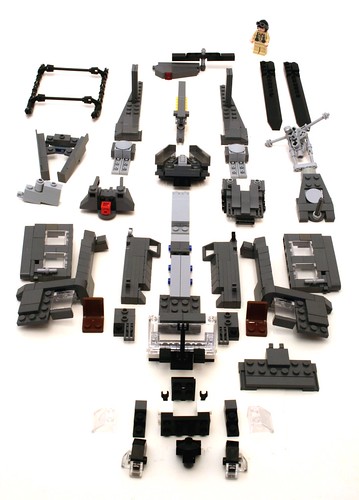
Anatomy of a huey

Image by psiaki

full breakdown pics rolling out in the next handful of days. I didn’t mean to &quotadvertise&quot this, but after I was completed taking it apart I could resist taking this image and I thought it turned out quite good.


for any questioning, it tends to make this helicopter when put together….correctly.


EDIT: see comprehensive breakdown pics here

Friday, October 23, 2015

Lastest Turned Components Makers News

Lauren Manufacturing marks 50 years

His concept that sponge extrusion would be the future in manufacturing was turned down by the business he worked for at the starting of his rubber profession in the 1950s, Hamilton-Kent Company. When he started the business that he branded right after his middle …
Study a lot more on Occasions Reporter


Microsoft Surface Book Review

Microsoft told us every little thing we thought we required to know about the Surface Book as a laptop, and then turned that on its head with its detachable tablet. It was showmanship worthy of an Apple occasion, instantly overshadowing the Surface Pro four and …
Study a lot more on SlashGear

Thursday, October 22, 2015

Pieces and components: A closer look at the aerospace industry

Pieces and components: A closer appear at the aerospace industry

This Brooklyn Heights organization began out as a service grinding job shop, but transitioned to turn into a contract manufacturer producing its personal parts in the mid-1990s, mentioned Cory Homer, its vice president of sales and advertising. … Aerospace is an …
Read much more on Crain’s Cleveland Business


Manx Precision Optics, International Space University Companion on 3-D Printing

In July 2015 MPO accomplished another milestone by attaining ISO 9001:2008 certification for its production of higher precision optical components. The organization has a really knowledgeable workforce and covers the full variety of optical manufacture, from grinding …
Study a lot more on Novus Light Technologies Right now


OptiPro PRO 160 Series for Production of Precision Optics Up To 160mm

OptiPro Systems, LLC, a specialist in offering precision optics fabrication equipment, introduced the PRO 160 Series comprising of 4 diverse platforms for precision optical grinding, polishing, and centering. Influenced by the verified accomplishment of …
Read far more on Novus Light Technologies Nowadays

Monday, August 10, 2015

Lastest Machining Components Manufacturer News

It takes a range of bait to reel in the proper talent

Recruiting and relocating an average of 5 of its 30-plus annual hires from outdoors the region, Mentor-based Element Repair Technologies (CRT) struggles to uncover the expertly skilled, highly technical staff it requirements here in Northeast Ohio to keep …
Study more on Crain’s Cleveland Enterprise


Additive Manufacturing with a Digital Procedure Chain in the Blok Group

The Blok Group views itself as a trend-setter and innovator with a comprehensive variety of services for establishing and producing high-top quality elements and options for demanding industries, like the aviation market with its high high quality and …
Study a lot more on ThomasNet News (press release) (blog)


Thermwood to Combine Additive &amp Subtractive Manufacturing In New Double Gantry

Historically a CNC machining business, Indiana-based Thermwood is in a position to make these graphic elements due to the addition of a second gantry permitting for a large, mounted extruder which both heats and melts the graphite in a close to shape process.
Study more on 3DPrint.com

Wednesday, July 8, 2015

Cool Precision Turned Components Suppliers images

Some cool precision turned components suppliers images:


Outing for a choose-up at the Montblanc Boutique on Bloor Street West Toronto (11)


Image by antefixus21

Montblanc Nicolas Rieussec chronograph automatic wrist watch.Swiss created.


Montblanc Wrist Watch wall display case.


Chronograph – Nicholas Rieussec time piece.


Swiss created.


Montblanc Nicolas Rieussec Chronograph Automatic Watch Overview

WRIST TIME Critiques

20 COMMENTSJANUARY three, 2011 BY ARIEL ADAMS


This watch overview is going to be a bit distinct than how I normally do them. Why? Simply because shortly ahead of the overview I was really able to check out the manufacture making the movements of this watch. That experience provided me some special insight that permitted me to recognize this timepiece more.

I know there is a lot of speak on the &quotmanufacture&quot movement. In reality, a recent panel discussion I had with fellow watch professional journalists allowed me to comprehend that there is no strict definition of &quotwatch manufacture&quot or &quotmanufacture movement.&quot This definitional ambiguity hurts my ability to explain things properly, but let it be stated that Montblanc makes the movement in each and every of the Nicolas Rieussec watches themselves. Of course there is some support from suppliers, but this is about as &quotin-property&quot a job as most people want it to be. My understanding is that the components of the movements are made at the Valfleurier facility in Buttes Switzerland. The pieces are then sent to Montblanc Le Locle for assembly and testing.


What fascinated me most about the Montblanc manufacture in Le Locle Switzerland was just how modern day it was. I imply it is accurate that many watch manufactures feel like you are in some combo of a hospital and science lab, but the machinery accessible to the watch makers at the Le Locle facility was impressive. I have a bigger feature length article on this subject that will come out quickly – but in quick, when it comes to the Nicolas Rieussec line of timepieces, Montblanc relies on a clever environment that combines the human method of watch makers with the precision help of machines.


A few example of this synergy between man (or lady) and machine? Here are two. One of the images here is of a machine that robotically applies lubricant to designated spots in a watch. Such lubricant should be precisely applied with an precise amount. The a lot more regularly applied the far better. Even though a human assembles the movement, a robot is utilized to apply the lubricant far better and with more precision in terms of quantity than any human can do regularly. One more instance is a machine that makes it possible for a watch maker to adjust the screws on a balance wheel and test the accuracy of the price in true time. Fundamentally the machine combines a magnifier, laptop controlled screw driver, and a watch movement rate tester in 1. Whilst it is operated by a person, the machine makes it straightforward to adjust a standard weighted balance wheel to its most precise weight distribution in the escapement assembly.


A single of my favourite photos here that illustrates the culture of the manufacture is the image of the watch tools with the pc mouse. If you look closely you are going to also notice the presence of a Montblanc pen. Each function station gives watchmakers a pc terminal as effectively as watch generating tools. Although I have seen this before, it undoubtedly is not frequent.


With their movements all created in Switzerland by Montblanc, the Nicolas Rieussec collection currently consists of a few watches. My primary focus here is on the Automatic Chronograph that also has a GMT and date complication (that I tested). The movement is identified as the R200. The two manually wound variants (with slightly diverse functions) are the R100, R110, and R120 (a limited edition that used a silicium escapement). I am not going to go overboard with technical information, but the movements represent an fascinating medium between the ultra-higher finish, and mass manufactured pieces.


The R200 has a lot of impressive characteristics on paper. Notable to the watch nerd is that it has a column wheel primarily based chronograph that uses a vertical clutch. These characteristics offer much more durability and precision when making use of the chronograph. There are really handful of European chronographs that function both of these functions. I ought to also note that some of Seiko’s larger-finish chronograph movements also feature column wheels and vertical clutches, as do pieces by brands such as Patek Philippe and (the former) Daniel Roth. Why all the concentrate on the chronograph? Properly that is the new signature complication of Montblanc. The brand latched on to the complication for good explanation (as effectively as to Mr. Nicolas Rieussec). &quotChronograph&quot literally implies &quottime writer.&quot What is Montblanc recognized for? Yes, making pens. Sound too great to be accurate to have a watch in your collection that is a &quottime writer?&quot So the emphasis on this complication make ideal sense. Nicolas Rieussec is guy credited with &quotinventing the chronograph.&quot Montblanc adopted him.


A although ago Rieussec produced a device that appears like an early seismograph. It was a clock with a cease and commence function that pulled a disc of paper along a smaller sized writing tip. This device was the very first identified &quotchronograph.&quot It was meant to measure time in horse races and actually &quotwrote.&quot The appear of the chronograph on the watch is taken from this early device. Montblanc keeps replicas of them about the manufacture for inspiration. Each Nicolas Rieussec watch uses two discs that move along stationary hands to show the chronograph time (up to 30 minutes). These are also monopusher chronographs that use a single pusher to cycle via &quotstart, cease, and reset&quot functions for the chronograph. The pusher is huge, easy to locate, and placed at the five o’clock position on the watch. Don’t miss the exposed synthetic palette rubies exposed on the leading of the chronograph dials.


This chronograph style is the signature look of the Nicolas Rieussec collection. The time is displayed on an off-centered dial at the prime of the face. Whilst tiny, Montblanc actually helped that dial standout and be legible. It utilizes that fancy looking font that you’ll uncover on most Montblanc Star watches. I truly do adore that font.


On the manually-wound versions of the Nicolas Rieussec, the time dial has a third hand employed for the date. On the automatic, the third had is GMT hand. Working just like you would assume, the main time hour hand can be independently adjusted to alter the time when moving by means of time zones when traveling. To the left of the dial is a day/evening indicator linked to the GMT hand. This helpful complication aid you know if it is day or evening on your second timezone offered that it is displayed on the 12, versus 24 hour scale. Who’d a even though this would turn out to be such a helpful travel watch? Both time zones share the minute hand. I was generally impressed by the GMT functionality of the watch and feels that the R200 movement’s use of the third hand is much better than having it be a date indicator.


Whilst the left of the dial has the day/evening indicator, the right has a date wheel. For symmetry Montblanc utilizes a window of a related shape, but I don’t significantly care for &quotopen&quot date windows. It also does not appear spectacular with the upper and reduced date becoming partially beneath the dial – although that does really help with keeping your focus on the actual date. While the windows that flank the time dial look good, I have a feeling Montblanc might function to revise or polish the style in future generations of the watch.


Coming in a couple of tones, the dial of the Montblanc Nicolas Rieussec is an intriguing creature. It took me a while to warm up to it, but I am enjoying the style. Although totally various than other collection Montblanc provides, the Nicolas Rieussec does share the brand’s DNA nicely. Of course the crown has that beautiful white Montblanc star, and the case is extremely much inspired by the Star collection. To produce visual depth, the power part of the dial is partially &quoteclipsed&quot by a plate of Geneva stripe polished metal – plus, the dial appears to be created up of a couple of layers. The chronograph dials are covered with a sort of wish-bone like bridge that utilizes blued steel screws (blued steel is also used for some of the hands). This is a nice element, but I had one suggestion for Montblanc. Even though this may well boost the price a bit, I feel it would be really welcome. The bridge is produced from stamped steel. What if it could be created from milled and hand-polished steel? It would provide a wonderful visual cue and reminder that this is a hand-assembled watch. Perhaps in the future.


Let’s visit the R200 movement again. It is an automatic version of the R100 with a few addition complications (as mentioned above). You can see the rotor placed over the movement, with the small Montblanc star shaped hole that is made to pass proper over the column wheel opening window. The movement has two mainspring barrels for a energy reserve of 72 hours. The movement operates at 28,800bmp and can be adjusted to be extremely correct. I saw a movement at the manufacture that was adjusted to operate within much less than a single second of deviation a day. I love that the movement combines modern technologies and traditionalism. Like I stated, it uses a free-weighted balance spring and column wheel, enjoys helps from highly sophisticated machinery in its assembly and manufacture.


The Nicolas Rieussec watch case is 43mm wide and 14.8mm tall. It is not a tiny watch, but it does wear like a medium 1. Its height is visually reduced by the hugely curved lugs. Front and rear crystal are sapphire (with the front crystal having double AR coating), although it is water resistant to 30 meters.


Montblanc has assured me that their dedication to the Nicolas Rieussec collection is intense. The collection will acquire far more focus in the future, which is aided by the reality that the watch is a advertising and marketing good results. A single of the motives for this is the pricing. Although the watches are not low cost they are a lot more affordable that you’d expect. The pieces come in gold, platinum, and steel. The gold models are in the ,000 range. Not low cost, but Montblanc is not asking for ,000. In fact, their platinum version is about ,000 – which in the luxury market place is not that considerably for a platinum watch. In steel the watch retails for about ,200. It comes in a steel bracelet or an alligator strap (black or brown). I am told that soon Montblanc will create a brand new metal bracelet for the Nicolas Rieussec collection.


General these are enjoyable watches. The Montblanc identity is a significant good, and I appreciate the visual style and functionality of the R200 movement. Even though distinctive in its looks, this is an straightforward watch to wear day-to-day. Montblanc isn’t generating a mere collector’s piece right here. Developed to avert boredom but sustain utility the Nicolas Rieussec watch collection is intended for all types of watch lovers to worn every day.

Monday, July 6, 2015

Nice Manufacturer Of Precision Machined Components pictures

Check out these manufacturer of precision machined components photos:


Steven F. Udvar-Hazy Center: B-29 Superfortress “Enola Gay”


Image by Chris Devers

Quoting Smithsonian National Air and Space Museum | Boeing B-29 Superfortress &quotEnola Gay&quot:


Boeing’s B-29 Superfortress was the most sophisticated propeller-driven bomber of Globe War II and the first bomber to residence its crew in pressurized compartments. Despite the fact that developed to fight in the European theater, the B-29 located its niche on the other side of the globe. In the Pacific, B-29s delivered a assortment of aerial weapons: standard bombs, incendiary bombs, mines, and two nuclear weapons.


On August 6, 1945, this Martin-constructed B-29-45-MO dropped the 1st atomic weapon utilised in combat on Hiroshima, Japan. Three days later, Bockscar (on show at the U.S. Air Force Museum close to Dayton, Ohio) dropped a second atomic bomb on Nagasaki, Japan. Enola Gay flew as the advance weather reconnaissance aircraft that day. A third B-29, The Great Artiste, flew as an observation aircraft on each missions.


Transferred from the United States Air Force.


Manufacturer:
Boeing Aircraft Co.
Martin Co., Omaha, Nebr.


Date:

1945


Nation of Origin:

United States of America


Dimensions:

All round: 900 x 3020cm, 32580kg, 4300cm (29ft 6 five/16in. x 99ft 1in., 71825.9lb., 141ft 15/16in.)


Components:

Polished general aluminum finish


Physical Description:

Four-engine heavy bomber with semi-monoqoque fuselage and higher-aspect ratio wings. Polished aluminum finish general, standard late-Planet War II Army Air Forces insignia on wings and aft fuselage and serial quantity on vertical fin 509th Composite Group markings painted in black &quotEnola Gay&quot in black, block letters on lower left nose.


Steven F. Udvar-Hazy Center: South hangar panorama, like Vought OS2U-3 Kingfisher seaplane, B-29 Enola Gay


Image by Chris Devers

Quoting Smithsonian National Air and Space Museum | Vought OS2U-3 Kingfisher:


The Kingfisher was the U.S. Navy’s main ship-based, scout and observation aircraft throughout Planet War II. Revolutionary spot welding strategies gave it a smooth, non-buckling fuselage structure. Deflector plate flaps that hung from the wing’s trailing edge and spoiler-augmented ailerons functioned like added flaps to permit slower landing speeds. Most OS2Us operated in the Pacific, exactly where they rescued a lot of downed airmen, which includes World War I ace Eddie Rickenbacker and the crew of his B-17 Flying Fortress.


In March 1942, this airplane was assigned to the battleship USS Indiana. It later underwent a six-month overhaul in California, returned to Pearl Harbor, and rejoined the Indiana in March 1944. Lt. j.g. Rollin M. Batten Jr. was awarded the Navy Cross for generating a daring rescue in this airplane under heavy enemy fire on July 4, 1944.


Transferred from the United States Navy.


Manufacturer:
Vought-Sikorsky Aircraft Division


Date:

1937


Country of Origin:

United States of America


Dimensions:

General: 15ft 1 1/8in. x 33ft 9 1/2in., 4122.6lb., 36ft 1 1/16in. (460 x 1030cm, 1870kg, 1100cm)


Supplies:

Wings covered with fabric aft of the primary spar


Physical Description:

Two-seat monoplane, deflector plate flaps hung from the trailing edge of the wing, ailerons drooped at low airspeeds to function like added flaps, spoilers.


• • • • •


Quoting Smithsonian National Air and Space Museum | Boeing B-29 Superfortress &quotEnola Gay&quot:


Boeing’s B-29 Superfortress was the most sophisticated propeller-driven bomber of Planet War II and the first bomber to residence its crew in pressurized compartments. Though designed to fight in the European theater, the B-29 located its niche on the other side of the globe. In the Pacific, B-29s delivered a variety of aerial weapons: standard bombs, incendiary bombs, mines, and two nuclear weapons.


On August six, 1945, this Martin-built B-29-45-MO dropped the very first atomic weapon employed in combat on Hiroshima, Japan. 3 days later, Bockscar (on show at the U.S. Air Force Museum close to Dayton, Ohio) dropped a second atomic bomb on Nagasaki, Japan. Enola Gay flew as the advance weather reconnaissance aircraft that day. A third B-29, The Excellent Artiste, flew as an observation aircraft on both missions.


Transferred from the United States Air Force.


Manufacturer:
Boeing Aircraft Co.
Martin Co., Omaha, Nebr.


Date:

1945


Nation of Origin:

United States of America


Dimensions:

Overall: 900 x 3020cm, 32580kg, 4300cm (29ft 6 5/16in. x 99ft 1in., 71825.9lb., 141ft 15/16in.)


Materials:

Polished all round aluminum finish


Physical Description:

4-engine heavy bomber with semi-monoqoque fuselage and high-aspect ratio wings. Polished aluminum finish overall, standard late-World War II Army Air Forces insignia on wings and aft fuselage and serial number on vertical fin 509th Composite Group markings painted in black &quotEnola Gay&quot in black, block letters on reduce left nose.

Monday, October 13, 2014

Nice Turning Components Manufacturer photographs

Some cool turning parts manufacturer pictures:


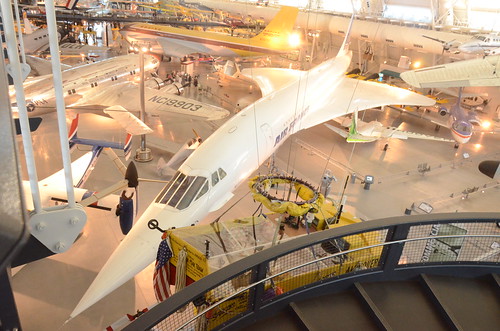
Steven F. Udvar-Hazy Center: Air France Concorde


Image by Chris Devers

Quoting Smithsonian National Air and Space Museum | Concorde, Fox Alpha, Air France:


The first supersonic airliner to enter service, the Concorde flew thousands of passengers across the Atlantic at twice the speed of sound for more than 25 years. Designed and constructed by Aérospatiale of France and the British Aviation Corporation, the graceful Concorde was a beautiful technological achievement that could not overcome severe economic issues.


In 1976 Air France and British Airways jointly inaugurated Concorde service to destinations about the globe. Carrying up to one hundred passengers in fantastic comfort, the Concorde catered to initial class passengers for whom speed was vital. It could cross the Atlantic in fewer than four hours – half the time of a conventional jet airliner. Nevertheless its high operating expenses resulted in very higher fares that restricted the quantity of passengers who could afford to fly it. These problems and a shrinking industry eventually forced the reduction of service till all Concordes were retired in 2003.


In 1989, Air France signed a letter of agreement to donate a Concorde to the National Air and Space Museum upon the aircraft’s retirement. On June 12, 2003, Air France honored that agreement, donating Concorde F-BVFA to the Museum upon the completion of its last flight. This aircraft was the 1st Air France Concorde to open service to Rio de Janeiro, Washington, D.C., and New York and had flown 17,824 hours.


Gift of Air France.


Manufacturer:
Societe Nationale Industrielle Aerospatiale
British Aircraft Corporation


Dimensions:

Wingspan: 25.56 m (83 ft 10 in)

Length: 61.66 m (202 ft three in)

Height: 11.3 m (37 ft 1 in)

Weight, empty: 79,265 kg (174,750 lb)

Weight, gross: 181,435 kg (400,000 lb)

Leading speed: two,179 km/h (1350 mph)

Engine: Four Rolls-Royce/SNECMA Olympus 593 Mk 602, 17,259 kg (38,050 lb) thrust every single

Manufacturer: Société Nationale Industrielle Aérospatiale, Paris, France, and British Aircraft Corporation, London, United Kingdom


Physical Description:

Aircaft Serial Number: 205. Such as 4 (four) engines, bearing respectively the serial quantity: CBE066, CBE062, CBE086 and CBE085.

Also included, aircraft plaque: &quotAIR FRANCE Lorsque viendra le jour d’exposer Concorde dans un musee, la Smithsonian Institution a dores et deja choisi, pour le Musee de l’Air et de l’Espace de Washington, un appariel portant le couleurs d’Air France.&quot


(Posted by an precision machining China Company and quality CNC machined parts China manufacturer and CNC machining services China supplier)

Monday, September 22, 2014

Assembly of Components and Tubing for the Medical Market | RAUMEDIC


The Assembly /Catheter company unit gives a wide spectrum of consumer-certain merchandise ranging from semi-finished elements, correct up to complete medic…
Video Rating: 5 / five


Johnson Matthey’s (http://www.twitter.com/johnson_matthey) Healthcare Device Elements business draws on its knowledge in valuable metals and precision enginee…
Video Rating: five / 5


(Posted by an precision machining China Company and quality CNC machined parts China manufacturer and CNC machining services China supplier)

Tuesday, September 16, 2014

Cool Precision Turning Components images

Check out these precision turning components photos:


Pad Prep


Image by jurvetson

Tom and the rest of the &quotrocket pit crew&quot helped me get it on the rail. (photo by oddwick)


It’s my heaviest rocket project so far. I fiber-glassed the physique, added a flight pc up in the nose cone, epoxy-coated the fins, and filled the remaining free space in the nose and tail cones with expanding two-element foam.


I like the sleek shape and symmetry of the style. In the early days of rocketry, I wonder if the comic books were the design inspiration. It turns out that this shape and weight distribution is unstable, and so I epoxied two pounds of lead buck shot into the tip of the nose cone to preserve it from spiraling out of control.


Here I am adjusting the angle to tilt slightly into the wind (to decrease the recovery hike distance).


I have already armed the on-board pc which will detonate five grams of black powder to pop a large parachute when it detects apogee (it has barometric and tilt sensors and an accelerometer it also logs flight data for later Computer download). The motor also has an ejection charge that will detonate 14 seconds right after launch as a redundant precaution.


The last step will be to thread the electric igniter up by way of the center of the strong-AP Aerotech K550 motor. Right after clipping to the 12V energy supply and a continuity test, she is ready to fly.


We are go flight.


(Posted by an precision machining China Company and quality CNC machined parts China manufacturer and CNC machining services China supplier)

Wednesday, September 3, 2014

Lastest Turned Components Companies News

Accurate ID Stories #33: The Entrepreneur, Component 3 – A Rude Awakening in China

Editor: Where we left off, designer and entrepreneur Pat Calello had run into the headaches that can come with overseas makers. Here he attempts to straighten factors out … As an alternative, I ended up reviewing components in a cramped, low-tech factory …
Study more on Core77.com (weblog)


My view: Exports are essential to Utah"s prosperity

I lead Boeing"s operations in Salt Lake County exactly where we assemble the 787"s vertical fin and horizontal stabilizer as well as create components utilised in each Boeing commercial airplane. Last year, simply because of the accomplishment of Boeing"s operations right here, we turned …
Study more on Deseret News


Exports essential to Utah"s prosperity

I lead Boeing"s operations in Salt Lake County where we assemble the 787"s vertical fin and horizontal stabilizer as nicely as create components employed in every Boeing commercial airplane. Final year, simply because of the accomplishment of Boeing"s operations right here, we turned …
Study more on Insurance News Net


(Posted by an precision machining China Company and quality CNC machined parts China manufacturer and CNC machining services China supplier)

Tuesday, August 26, 2014

Nice China Machined Components Manufacturers photos

A few nice machined components China manufacturers images I found:


F106A nose gear from aft


Image by wbaiv

All kinds of good stuff here for a model builder like myself- white landing gear leg, wheels, looks like a bare metal casting for the steering mechanism on the back of the leg (front is front). Back blade antenna behind the gear bay, some kind of circular, non-metallic panel (radar altimeter?) behind that, then a little blade antenna closest to the camera.


At the steering mechanism, bare metal hydraulic lines (stainless steel?) and fittings, an electromechanical component of some in bare, grayish, metal, and a hydraulic object of some kind painted in approximately "Interior Green". Reddish silicone caulking seals what are probably wires/cables to the gray metallic item, and it has a black manufacturer’s plate on it. On the starboard side (right) of the cast metal steering mechanism, there’s a gray fitting or cover.


Like the photo from the side, there’s the darker gray interior on the gear door, with a black sealing strip, and back of the landing lamp housing is also dark gray.

DSC_0923


Old Jaguar E-type sports car: front view (close)


Image by Chris Devers
Funny story about this photo….


• • • • •


Quoting from Wikipedia: Jaguar E-Type:


• • • • •


The Jaguar E-Type (UK) or XK-E (US) is a British automobile manufactured by Jaguar between 1961 and 1974. Its combination of good looks, high performance, and competitive pricing established the marque as an icon of 1960s motoring. A great success for Jaguar, over seventy thousand E-Types were sold during its lifespan.


In March 2008, the Jaguar E-Type ranked first in Daily Telegraph list of the "100 most beautiful cars" of all time.[2] In 2004, Sports Car International magazine placed the E-Type at number one on their list of Top Sports Cars of the 1960s.


Contents


1 Overview

2 Concept versions

•• 2.1 E1A (1957)

•• 2.2 E2A (1960)

3 Production versions

•• 3.1 Series 1 (1961-1968)

•• 3.2 Series 2 (1969-1971)

•• 3.3 Series 3 (1971-1975)

4 Limited edtions

•• 4.1 Low Drag Coupé (1962)

•• 4.2 Lightweight E-Type (1963-1964)

5 Motor Sport

6 See also

7 References

8 External links


Overview


The E-Type was initially designed and shown to the public as a grand tourer in two-seater coupé form (FHC or Fixed Head Coupé) and as convertible (OTS or Open Two Seater). The 2+2 version with a lengthened wheelbase was released several years later.


On its release Enzo Ferrari called it "The most beautiful car ever made".


The model was made in three distinct versions which are now generally referred to as "Series 1", "Series 2" and "Series 3". A transitional series between Series 1 and Series 2 is known unofficially as "Series 1½".


In addition, several limited-edition variants were produced:


• The "’Lightweight’ E-Type" which was apparently intended as a sort of follow-up to the D-Type. Jaguar planned to produce 18 units but ultimately only a dozen were reportedly built. Of those, one is known to have been destroyed and two others have been converted to coupé form. These are exceedingly rare and sought after by collectors.

• The "Low Drag Coupé" was a one-off technical exercise which was ultimately sold to a Jaguar racing driver. It is presently believed to be part of the private collection of the current Viscount Cowdray.


Concept versions


E1A (1957)


After their success at LeMans 24 hr through the 1950s Jaguars defunct racing department were given the brief to use D-Type style construction to build a road going sports car, replacing the XK150.


It is suspected that the first prototype (E1A) was given the code based on: (E): The proposed production name E-Type (1): First Prototype (A): Aluminium construction (Production models used steel bodies)


The car featured a monocoque design, Jaguar’s fully independent rear suspension and the well proved "XK" engine.


The car was used solely for factory testings and was never formally released to the public. The car was eventually scrapped by the factory


E2A (1960)


Jaguar’s second E-Type concept was E2A which unlike E1A was constructed from a steel chassis and used a aluminium body. This car was completed as a race car as it was thought by Jaguar at the time it would provide a better testing ground.


E2A used a 3 litre version of the XK engine with a Lucas fuel injection system.


After retiring from the LeMans 24 hr the car was shipped to America to be used for racing by Jaguar privateer Briggs Cunningham.


In 1961 the car returned to Jaguar in England to be used as a testing mule.


Ownership of E2A passed to Roger Woodley (Jaguars customer competition car manager) who took possession on the basis the car not be used for racing. E2A had been scheduled to be scrapped.


Roger’s wife Penny Griffiths owned E2A until 2008 when it was offered for sale at Bonham’s Quail Auction. Sale price was US.5 million


Production versions


Series 1 (1961-1968)


Series I


• Production

1961–1968[3] [4]


Body style(s)

2-door coupe

2-door 2+2 coupe

2-door convertible


Engine(s)

3.8 L XK I6

4.2 L XK I6


Wheelbase

96.0 in (2438 mm) (FHC / OTS)

105.0 in (2667 mm) (2+2) [5]


• Length

175.3125 in (4453 mm) (FHC / OTS)

184.4375 in (4685 mm) (2+2) [5]


• Width

65.25 in (1657 mm) (all) [5]


• Height

48.125 in (1222 mm) (FHC)

50.125 in (1273 mm) (2+2)

46.5 in (1181 mm) (OTS)[5]


Curb weight

2,900 lb (1,315 kg) (FHC)

2,770 lb (1,256 kg) (OTS)

3,090 lb (1,402 kg) (2+2) [6]


• Fuel capacity

63.64 L (16.8 US gal; 14.0 imp gal)[5]


The Series 1 was introduced, initially for export only, in March 1961. The domestic market launch came four months later in July 1961.[7] The cars at this time used the triple SU carburetted 3.8 litre 6-cylinder Jaguar XK6 engine from the XK150S. The first 500 cars built had flat floors and external hood (bonnet) latches. These cars are rare and more valuable. After that, the floors were dished to provide more leg room and the twin hood latches moved to inside the car. The 3.8 litre engine was increased to 4.2 litres in October 1964.[7]


All E-Types featured independent coil spring rear suspension with torsion bar front ends, and four wheel disc brakes, in-board at the rear, all were power-assisted. Jaguar was one of the first auto manufacturers to equip cars with disc brakes as standard from the XK150 in 1958. The Series 1 can be recognised by glass covered headlights (up to 1967), small "mouth" opening at the front, signal lights and tail-lights above bumpers and exhaust tips under the licence plate in the rear.


3.8 litre cars have leather-upholstered bucket seats, an aluminium-trimmed centre instrument panel and console (changed to vinyl and leather in 1963), and a Moss 4-speed gearbox that lacks synchromesh for 1st gear ("Moss box"). 4.2 litre cars have more comfortable seats, improved brakes and electrical systems, and an all-synchromesh 4-speed gearbox. 4.2 litre cars also have a badge on the boot proclaiming "Jaguar 4.2 Litre E-Type" (3.8 cars have a simple "Jaguar" badge). Optional extras included chrome spoked wheels and a detachable hard top for the OTS.


An original E-Type hard top is very rare, and finding one intact with all the chrome, not to mention original paint in decent condition, is rather difficult. For those who want a hardtop and aren’t fussy over whether or not it is an original from Jaguar, several third parties have recreated the hardtop to almost exact specifications. The cost ranges anywhere from double to triple the cost of a canvas/vinyl soft top.


A 2+2 version of the coupé was added in 1966. The 2+2 offered the option of an automatic transmission. The body is 9 in (229 mm) longer and the roof angles are different with a more vertical windscreen. The roadster remained a strict two-seater.


There was a transitional series of cars built in 1967-68, unofficially called "Series 1½", which are externally similar to Series 1 cars. Due to American pressure the new features were open headlights, different switches, and some de-tuning (with a downgrade of twin Zenith-Stromberg carbs from the original triple SU carbs) for US models. Some Series 1½ cars also have twin cooling fans and adjustable seat backs. Series 2 features were gradually introduced into the Series 1, creating the unofficial Series 1½ cars, but always with the Series 1 body style.


Less widely known, there was also right at the end of Series 1 production and prior to the transitional "Series 1½" referred to above, a very small number of Series 1 cars produced with open headlights.[8] These are sometimes referred to as "Series 1¼" cars.[9] Production dates on these machines vary but in right hand drive form production has been verified as late as March 1968.[10] It is thought that the low number of these cars produced relative to the other Series make them amongst the rarest of all production E Types.


An open 3.8 litre car, actually the first such production car to be completed, was tested by the British magazine The Motor in 1961 and had a top speed of 149.1 mph (240.0 km/h) and could accelerate from 0-60 mph (97 km/h) in 7.1 seconds. A fuel consumption of 21.3 miles per imperial gallon (13.3 L/100 km; 17.7 mpg-US) was recorded. The test car cost £2097 including taxes.[11]


Production numbers from Graham[12]:


• 15,490 3.8s

• 17,320 4.2s

• 10,930 2+2s


Production numbers from xkedata.com[13]: [omitted -- Flickr doesn"t allow tables]


Series 2 (1969-1971)


Series II


• Production

1969–1971[3] [4]


Body style(s)

2-door coupe

2-door 2+2 coupe

2-door convertible


Engine(s)

4.2 L XK I6


Curb weight

3,018 lb (1,369 kg) (FHC)

2,750 lb (1,247 kg) (OTS)

3,090 lb (1,402 kg) (2+2) [6]


Open headlights without glass covers, a wrap-around rear bumper, re-positioned and larger front indicators and taillights below the bumpers, better cooling aided by an enlarged "mouth" and twin electric fans, and uprated brakes are hallmarks of Series 2 cars. De-tuned in US, but still with triple SUs in the UK, the engine is easily identified visually by the change from smooth polished cam covers to a more industrial ‘ribbed’ appearance. Late Series 1½ cars also had ribbed cam covers. The interior and dashboard were also redesigned, with rocker switches that met U.S health and safety regulations being substituted for toggle switches. The dashboard switches also lost their symmetrical layout. New seats were fitted, which purists claim lacked the style of the originals but were certainly more comfortable. Air conditioning and power steering were available as factory options.


Production according to Graham[12] is 13,490 of all types.


Series 2 production numbers from xkedata.com[13]: [omitted -- Flickr doesn"t allow tables]


Official delivery numbers by market and year are listed in Porter[3] but no summary totals are given.


Series 3 (1971-1975)


Series III


• Production

1971–1975


Body style(s)

2-door 2+2 coupe

2-door convertible


Engine(s)

5.3 L Jaguar V12


Wheelbase

105 in (2667 mm) (both)[6]


• Length

184.4 in (4684 mm) (2+2)

184.5 in (4686 mm) (OTS)[6]


• Width

66.0 in (1676 mm) (2+2)

66.1 in (1679 mm) (OTS)[6]


• Height

48.9 in (1242 mm) (2+2)

48.1 in (1222 mm) (OTS)[6]


Curb weight

3,361 lb (1,525 kg) (2+2)

3,380 lb (1,533 kg) (OTS)[6]


• Fuel capacity

82 L (21.7 US gal; 18.0 imp gal)[14]


A new 5.3 L 12-cylinder Jaguar V12 engine was introduced, with uprated brakes and standard power steering. The short wheelbase FHC body style was discontinued and the V12 was available only as a convertible and 2+2 coupé. The convertible used the longer-wheelbase 2+2 floorplan. It is easily identifiable by the large cross-slatted front grille, flared wheel arches and a badge on the rear that proclaims it to be a V12. There were also a very limited number of 4.2 litre six-cylinder Series 3 E-Types built. These were featured in the initial sales literature. It is believed these are the rarest of all E-Types of any remaining.


In 2008 a British classic car enthusiast assembled what is surely the last ever E-Type from parts bought from the end-of-production surplus in 1974.[15]


Graham[12] lists production at 15,290.


Series 3 production numbers from xkedata.com[13]: [omitted -- Flickr doesn"t allow tables]


Limited edtions


Two limited production E-Type variants were made as test beds, the Low Drag Coupe and Lightweight E-Type, both of which were raced:


Low Drag Coupé (1962)


Shortly after the introduction of the E-Type, Jaguar management wanted to investigate the possibility of building a car more in the spirit of the D-Type racer from which elements of the E-Type’s styling and design were derived. One car was built to test the concept designed as a coupé as its monocoque design could only be made rigid enough for racing by using the "stressed skin" principle. Previous Jaguar racers were built as open-top cars because they were based on ladder frame designs with independent chassis and bodies. Unlike the steel production E-Types the LDC used lightweight aluminium. Sayer retained the original tub with lighter outer panels riveted and glued to it. The front steel sub frame remained intact, the windshield was given a more pronounced slope and the rear hatch welded shut. Rear brake cooling ducts appeared next to the rear windows,and the interior trim was discarded, with only insulation around the transmission tunnel. With the exception of the windscreen, all cockpit glass was plexi. A tuned version of Jaguar’s 3.8 litre engine with a wide angle cylinder-head design tested on the D-Type racers was used. Air management became a major problem and, although much sexier looking and certainly faster than a production E-Type, the car was never competitive: the faster it went, the more it wanted to do what its design dictated: take off.


The one and only test bed car was completed in summer of 1962 but was sold a year later to Jaguar racing driver Dick Protheroe who raced it extensively and eventually sold it. Since then it has passed through the hands of several collectors on both sides of the Atlantic and now is believed to reside in the private collection of the current Viscount Cowdray.


Lightweight E-Type (1963-1964)


In some ways, this was an evolution of the Low Drag Coupé. It made extensive use of aluminium alloy in the body panels and other components. However, with at least one exception, it remained an open-top car in the spirit of the D-Type to which this car is a more direct successor than the production E-Type which is more of a GT than a sports car. The cars used a tuned version of the production 3.8 litre Jaguar engine with 300 bhp (224 kW) output rather than the 265 bhp (198 kW) produced by the "ordinary" version. At least one car is known to have been fitted with fuel-injection.


The cars were entered in various races but, unlike the C-Type and D-Type racing cars, they did not win at Le Mans or Sebring.


Motor Sport


Bob Jane won the 1963 Australian GT Championship at the wheel of an E-Type.


The Jaguar E-Type was very successful in SCCA Production sports car racing with Group44 and Bob Tullius taking the B-Production championship with a Series-3 V12 racer in 1975. A few years later, Gran-Turismo Jaguar from Cleveland Ohio campaigned a 4.2 L 6 cylinder FHC racer in SCCA production series and in 1980, won the National Championship in the SCCA C-Production Class defeating a fully funded factory Nissan Z-car team with Paul Newman.


See also


Jaguar XK150 – predecessor to the E-Type

Jaguar XJS – successor to the E-Type

Jaguar XK8 – The E-Type’s current and spiritual successor

Guyson E12 – a rebodied series III built by William Towns


References


^ Loughborough graduate and designer of E Type Jaguar honoured

^ 100 most beautiful cars

• ^ a b cPorter, Philip (2006). Jaguar E-type, the definitive history. p. 443. ISBN 0-85429-580-1.

• ^ a b"’69 Series 2 Jaguar E Types", Autocar, October 24, 1968

• ^ a b c d eThe Complete Official Jaguar "E". Cambridge: Robert Bentley. 1974. p. 12. ISBN 0-8376-0136-3.

• ^ a b c d e f g"Jaguar E-Type Specifications". www.web-cars.com/e-type/specifications.php. Retrieved 29 August 2009.

• ^ a b"Buying secondhand E-type Jaguar". Autocar 141 (nbr4042): pages 50–52. 6 April 1974.

^ See Jaguar Clubs of North America concourse information at: [1] and more specifically the actual Series 1½ concourse guide at [2]

^ Ibid.

^ Compare right hand drive VIN numbers given in JCNA concours guide referred to above with production dates for right hand drive cars as reflected in the XKEdata database at [3]

^"The Jaguar E-type". The Motor. March 22, 1961.

• ^ a b cRobson, Graham (2006). A–Z British Cars 1945–1980. Devon, UK: Herridge & Sons. ISBN 0-9541063-9-3.

• ^ a b chttp://www.xkedata.com/stats/. www.xkedata.com/stats/. Retrieved 29 August 2009.

^Daily Express Motor Show Review 1975 Cars: Page 24 (Jaguar E V12). October 1974.

^ jalopnik.com/5101872/british-man-cobbles-together-last-ja…

Most popular Turned Components Manufacturer auctions

Most popular turned components China manufacturer eBay auctions:

Saturday, August 23, 2014

Lastest Precision Turned Components Suppliers News

Depth, Distance Challenges Setup of Concrete Equipment

Among these is a rotary rail dump pit where rail cars will be literally turned upside down to empty raw materials into a collection pit — a pit that began with 345,000 cu. yds. (263,771 cu m) of dirt excavated to create it. The pit was unusual and so …
Read more on Construction Equipment Guide


The Preferred Method for Electronic Test

Development of new oscilloscope capabilities and value can now quickly leverage the newest available hardware components and the refinements of a multi-generational user interface faster. Once digital oscilloscopes became established as the tool of …
Read more on R & D Magazine