Showing posts with label Manufacturer. Show all posts

Sunday, August 30, 2015

Nice Machining Manufacturer photos

Check out these machining manufacturer photos:


Image from web page 17 of “Scientific American Volume 85 Quantity 01 (July 1901)” (1901)


Image by World wide web Archive Book Images
Identifier: scientific-american-1901-07-06
Title: Scientific American Volume 85 Number 01 (July 1901)
Year: 1901 (1900s)
Authors:
Subjects: gas railroad munn cents steam companies american electric scientific american natural gas sheet metal sewing machine ten cents american supplement extended island soft coal cubic feet bituminous coal
Publisher:


View Book Web page: Book Viewer
About This Book: Catalog Entry
View All Pictures: All Pictures From Book


Click right here to view book online to see this illustration in context in a browseable on the internet version of this book.


Text Appearing Ahead of Image:
S OIL—SMELTER—MINES « DOUGLAS. LACEY&ampCO. ^ ItuiikerN, lir(»kerM, FImuI Ae^nt f Members N. V. Codsoli,luted St.H-k Kxcliaiine aud Los Angeles, ■W) fal. Stoi-k K.xfharifje. *? 68 BROADWAY and 17 NEW ST.. NEW YORK. ^ Divi«UMiiUi»Rying Mining, Oil and four^ Smelter Stocks^, U^ted aud Uu- &ltC^ lifted, Oiii Specialty. four^ Booklets providing our effective strategy for realizing ^ the massive it-ofits of legitimate mining. •i and ^ smelter investments, subscription blanks, complete Zi particulars, and so on., sent cost-free to any intereste* on ^ appltcatfon. ■♦f BUANtTlES-noston, Philadeliihia. Chicago. 4h rieveliind, Cincinnati, St. L«uis, Hartford and * New JIaveiL Conn. Prescott. Ariz.. Lus Angeles. *) Cal., St. .lohn, N. B., Montreal, Toronto, and ^ T.,oTi(loii. Eiigland. HOMER F. LIVERMORE MiGM grade: STEEL. MALLEABLE. GREY IRON,BRONZE, BRASS and ALUMINIUM CASTIWGS Sen.l Samples far Rates, Statiiif, Quantity Required.80 PEARL STREET. – – BOSTON, MASS.


Text Appearing After Image:
Potent, Itesijoiisive, Durable aud Effective. The ReevesVariable Speed Countershaft for securing any speed withoutchange of belt or loss of time. Es-pecially adapted for all types f)f Iron-witrking Machinery, Iron Lathes,IManei-s, Boiing Mills, Shapers. and so on.Cement, Machinery, ExperimentalMncbinery—in fact all kinds of ma-cliinery requiring a modify of s[ieetl.Witb it a lai^e increusc and a bettergrade tiE operate can be i&gtro«uced. ZJT Send for haiiilsomclii iUustrate^icatalogue N. A. free. REEVES PULLEY CO. COLUMBUS. IND., U. S. A. Acetylene Generators ARE Ideal. Over ten,000 Machines Sold. They are endorsed by each and every user. Send for costs. Handsomely illustrated catalogue.District Hepresentativea all overthe world. EAQLE GENERATOR COMPA^Y, 319 N. 4th Street.St. Louis, Mo.


Note About Photos
Please note that these photos are extracted from scanned page pictures that may have been digitally enhanced for readability – coloration and look of these illustrations may not perfectly resemble the original work.


Image from web page 17 of “Scientific American Volume 85 Number 01 (July 1901)” (1901)


Image by Web Archive Book Photos
Identifier: scientific-american-1901-07-06
Title: Scientific American Volume 85 Number 01 (July 1901)
Year: 1901 (1900s)
Authors:
Subjects: gas railroad munn cents steam companies american electric scientific american organic gas sheet metal sewing machine ten cents american supplement extended island soft coal cubic feet bituminous coal
Publisher:


View Book Web page: Book Viewer
About This Book: Catalog Entry
View All Images: All Photos From Book


Click right here to view book on the web to see this illustration in context in a browseable on-line version of this book.


Text Appearing Before Image:
The No. 4YOST WRITING MACHINE The distinctive attributes of the Yost Ma-chine, permanent alignment, direct inking,lovely function, strength, simplicity, anddurability are shown in perfection in theNo. 4 Model. YostWritinglYlachineCo. NEW YORK CITY. LONDON, ENQ.


Text Appearing Following Image:
S OIL—SMELTER—MINES « DOUGLAS. LACEY&ampCO. ^ ItuiikerN, lir(»kerM, FImuI Ae^nt f Members N. V. Codsoli,luted St.H-k Kxcliaiine aud Los Angeles, ■W) fal. Stoi-k K.xfharifje. *? 68 BROADWAY and 17 NEW ST.. NEW YORK. ^ Divi«UMiiUi»Rying Mining, Oil and 4^ Smelter Stocks^, U^ted aud Uu- &ltC^ lifted, Oiii Specialty. 4^ Booklets providing our effective plan for realizing ^ the huge it-ofits of reputable mining. •i and ^ smelter investments, subscription blanks, full Zi particulars, and so forth., sent cost-free to any intereste* on ^ appltcatfon. ■♦f BUANtTlES-noston, Philadeliihia. Chicago. 4h rieveliind, Cincinnati, St. L«uis, Hartford and * New JIaveiL Conn. Prescott. Ariz.. Lus Angeles. *) Cal., St. .lohn, N. B., Montreal, Toronto, and ^ T.,oTi(loii. Eiigland. HOMER F. LIVERMORE MiGM grade: STEEL. MALLEABLE. GREY IRON,BRONZE, BRASS and ALUMINIUM CASTIWGS Sen.l Samples far Prices, Statiiif, Quantity Needed.80 PEARL STREET. – – BOSTON, MASS.


Note About Pictures
Please note that these pictures are extracted from scanned page photos that may have been digitally enhanced for readability – coloration and look of these illustrations might not perfectly resemble the original perform.


Image from web page 17 of “Scientific American Volume 85 Quantity 01 (July 1901)” (1901)


Image by Web Archive Book Photos
Identifier: scientific-american-1901-07-06
Title: Scientific American Volume 85 Number 01 (July 1901)
Year: 1901 (1900s)
Authors:
Subjects: gas railroad munn cents steam companies american electric scientific american all-natural gas sheet metal sewing machine ten cents american supplement long island soft coal cubic feet bituminous coal
Publisher:


View Book Web page: Book Viewer
About This Book: Catalog Entry
View All Images: All Pictures From Book


Click right here to view book online to see this illustration in context in a browseable on the web version of this book.


Text Appearing Before Image:
LESGHEN &amp SONS ROPE Owners and ManufacturersLESCHEN CO.S PATENT AUTOMATIC AERIAL


Text Appearing Following Image:
(Ira-ie Mark littgistered.) WIRE ROPE TRAMWAY -^^^o?JrT^og.cWIRE ROPE We also manufacture all types of « KODAK 99 Stands for allthat is Very best inPhotography To the perfection of Kodakconstruction, to the perfec=tion of the Kodak mechan=ism, to the perfection ofthe Kodak lenses, is due the triumph of Kodakerp All Kodaks I^oail in Daylight with our TransparentFilm Cartriilfjes. A number of designs use either films •rplates. Sixty-4 page cataiofjiie, tiescribiiig themin detail, free at the Kodak dealers or by mail. EASTMAN KODAK CO. Rochester, N. Y. .jFSSOPS STEEL^BV/r J^ FOR TOOLS. SAWS And so on. WM JESSOP A SONS L5 91 JOHN ST. NEW YORK PETER T. AUSTEN CHEMICAL Expert. Testing, Ierfei-ting, Introducing and Disposing ofChemical Patents, Processes. Il-oducts, horinulas. and so forth. Utilization of Wastes and Unapjjlied Subsiances. Im-provement and Invention of Processes ami Iniducts.Reduction of Manufacturing Costs. E.^perinieiital In-vestieation of rocluiical Issues. Workitig out hor-mulas tor Manu


Note About Images
Please note that these photos are extracted from scanned web page pictures that may have been digitally enhanced for readability – coloration and look of these illustrations may not completely resemble the original operate.

Wednesday, August 12, 2015

Good Manufacturer Of Precision Machined Elements photos

Some cool manufacturer of precision machined elements images:


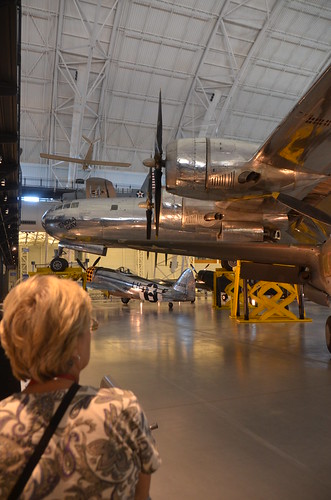
Steven F. Udvar-Hazy Center: B-29 Superfortress “Enola Gay” panorama


Image by Chris Devers

Quoting Smithsonian National Air and Space Museum | Boeing B-29 Superfortress &quotEnola Gay&quot:


Boeing’s B-29 Superfortress was the most sophisticated propeller-driven bomber of World War II and the 1st bomber to residence its crew in pressurized compartments. Although designed to fight in the European theater, the B-29 identified its niche on the other side of the globe. In the Pacific, B-29s delivered a assortment of aerial weapons: conventional bombs, incendiary bombs, mines, and two nuclear weapons.


On August six, 1945, this Martin-constructed B-29-45-MO dropped the first atomic weapon utilised in combat on Hiroshima, Japan. Three days later, Bockscar (on display at the U.S. Air Force Museum near Dayton, Ohio) dropped a second atomic bomb on Nagasaki, Japan. Enola Gay flew as the advance weather reconnaissance aircraft that day. A third B-29, The Great Artiste, flew as an observation aircraft on both missions.


Transferred from the United States Air Force.


Manufacturer:
Boeing Aircraft Co.
Martin Co., Omaha, Nebr.


Date:

1945


Country of Origin:

United States of America


Dimensions:

All round: 900 x 3020cm, 32580kg, 4300cm (29ft six five/16in. x 99ft 1in., 71825.9lb., 141ft 15/16in.)


Components:

Polished general aluminum finish


Physical Description:

Four-engine heavy bomber with semi-monoqoque fuselage and higher-aspect ratio wings. Polished aluminum finish all round, standard late-Planet War II Army Air Forces insignia on wings and aft fuselage and serial number on vertical fin 509th Composite Group markings painted in black &quotEnola Gay&quot in black, block letters on lower left nose.


Steven F. Udvar-Hazy Center: B-29 Superfortress &quotEnola Gay&quot panorama


Image by Chris Devers

Quoting Smithsonian National Air and Space Museum | Boeing B-29 Superfortress &quotEnola Gay&quot:


Boeing’s B-29 Superfortress was the most sophisticated propeller-driven bomber of Globe War II and the very first bomber to home its crew in pressurized compartments. Even though created to fight in the European theater, the B-29 identified its niche on the other side of the globe. In the Pacific, B-29s delivered a selection of aerial weapons: standard bombs, incendiary bombs, mines, and two nuclear weapons.


On August 6, 1945, this Martin-built B-29-45-MO dropped the very first atomic weapon utilized in combat on Hiroshima, Japan. Three days later, Bockscar (on show at the U.S. Air Force Museum near Dayton, Ohio) dropped a second atomic bomb on Nagasaki, Japan. Enola Gay flew as the advance weather reconnaissance aircraft that day. A third B-29, The Fantastic Artiste, flew as an observation aircraft on each missions.


Transferred from the United States Air Force.


Manufacturer:
Boeing Aircraft Co.
Martin Co., Omaha, Nebr.


Date:

1945


Country of Origin:

United States of America


Dimensions:

All round: 900 x 3020cm, 32580kg, 4300cm (29ft six five/16in. x 99ft 1in., 71825.9lb., 141ft 15/16in.)


Supplies:

Polished general aluminum finish


Physical Description:

4-engine heavy bomber with semi-monoqoque fuselage and higher-aspect ratio wings. Polished aluminum finish all round, normal late-Planet War II Army Air Forces insignia on wings and aft fuselage and serial number on vertical fin 509th Composite Group markings painted in black &quotEnola Gay&quot in black, block letters on reduce left nose.


Steven F. Udvar-Hazy Center: Kawanishi N1K2-Ja Shiden Kai “George”


Image by Chris Devers
See a lot more images of this, and the Wikipedia write-up.


Details, quoting from Smithsonian National Air and Space Museum: Steven F. Udvar-Hazy | Kawanishi N1K2-Ja Shiden (Violet Lightning) Kai (Modified) &quotGEORGE&quot:


GEORGE is the unlikely Allied nickname for the greatest Japanese naval fighter made in quantity during Globe War II. The official Japanese name and designation was Kawanishi N1K2 Shiden (Violet Lightning). This outstanding land-based fighter sprang straight from a floatplane fighter design and style, the N1K1 REX (see NASM collection).


A lot of countries utilized floatplanes for scouting and reconnaissance duties, and to hunt submarines and surface ships, but only Japan built and fielded fighters on floats. The Japanese Imperial Navy intended to use these specialized aircraft to achieve air superiority above a beachhead to support amphibious landing operations where carrier or land-based fighters have been unavailable. The Kawanishi N1K1 (Allied codename REX) was the only airplane designed particularly for this purpose to fly throughout World War II.


In September 1940, the Japanese Navy issued a specification for floatplane fighters capable of supporting offensive naval operations. A group of engineers like Toshihara Baba, Shizuo Kikuhara, Hiroyuki Inoue, and Elizaburo Adachi had readied the very first prototype by May possibly 1942, and it flew on May possibly 6. Tests showed that the speed of new airplane was only slightly less than the Mitsubishi A6M Zero (see NASM collection) and the amphibious fighter was practically as maneuverable as its land-based cousin. This was exceptional performance for an aircraft that could not retract or jettison its enormous landing gear.


Long just before the initial Kyofu flew, Kawanishi engineers believed that the standard design and style would also make an excellent land-primarily based fighter. The conversion appeared to entail just replacing the primary and wingtip floats with a conventional landing gear. The organization decided to develop this variant as a private venture. As the project unfolded, the engineers decided to replace the 14-cylinder engine with a new 18-cylinder model expected to create about 2,000 horsepower. The new engine required a bigger propeller and this element, in turn, needed abnormally extended landing gear struts to stop the blade suggestions from contacting the ground. Kawanishi flew the initial N1K1-J land-based fighter on December 27, 1942. The new engine failed to deliver the anticipated energy and the landing gear functioned poorly. The airplane also fell brief of projected speed (649 kph – 403 mph) by 74 kph (46 mph) and could handle only 575 kph (357 mph). This was more quickly than the Mitsubishi A6M Zero ZEKE, nonetheless, and the Japanese Navy badly required an efficient counter to new American naval fighter aircraft such as the Grumman F6F Hellcat and Vought F4U Corsair (see NASM collection). The Japanese Navy ordered Kawanishi to abandon two other fighter projects and begin developing Shidens.


By the end of 1943, Kawanishi delivered about 70 of the new fighters and the Navy employed these airplanes for pilot familiarization and instruction. Expecting Allied amphibious landings in the Philippines, the Navy sent the very first Shiden unit to Cebu in time to challenge Allied air power supporting the invasion of that island in October 1944. Engine, landing gear, logistics, and maintenance difficulties plagued the Shiden units but Allied pilots realized they faced a excellent new Japanese fighter.


With N1K1-J production underway and Shidens flying combat missions, Kawanishi set about refining the style. They lowered the wings from mid-fuselage and the further ground clearance permitted the engineers to install a shorter, a lot more traditional and significantly less-troublesome landing gear, simplified the fuselage structure, and redesigned the empennage. Only the wings and armament remained from the initial style. The engine continued to give problems, but the Navy was impressed with these improvements and ordered the new version into production as the N1K2-J Shiden Kai (modified). In air-to-air combat, seasoned Japanese pilots flying Shiden Kais could far more than hold their own against most American pilots flying F6F Hellcats. In February 1945, a brave pilot, Warrant Officer Muto, single-handedly engaged 12 Hellcats and shot down four of them just before the remainder disengaged. Flying intercept missions against Boeing B-29 Superfortresses above the residence islands, the Shiden Kai was much less effective since of inadequate climb speed and power loss at higher altitudes.


Kawanishi created several other variants and planned much more when the war ended. About 1,500 of the different models have been developed. In battle more than Formosa (Taiwan), the Philippines, Okinawa, and the home islands, Shiden pilots acquitted themselves well but this outstanding airplane was another good design and style that appeared also late and in also couple of numbers to reverse Japan’s fortunes in the air war.


NASM’s Shiden Kai is 1 of three remaining right now. The other two are displayed at the U. S. Air Force Museum in Dayton, Ohio, and the New England Air Museum in Windsor Locks, Connecticut. American intelligence units collected 4 GEORGE fighters from a variety of Japanese airfields and delivered them to Yokosuka Naval Shipyard for shipment to the United States. The NASM GEORGE came from Omura or Oppama Naval Air Station, Japan, and the fighter arrived stateside aboard the escort carrier &quotUSS Barnes.&quot It was almost certainly evaluated at the Naval Aircraft Factory at Philadelphia, and then moved to Willow Grove Naval Air Station. The GEORGE remained outdoors on show and steadily deteriorated along with a group of German and Japanese airplanes until 1983 when the Smithsonian Institution acquired it. The airplane was stored at the Paul Garber Facility till NASM loaned it to the Champlin Fighter Museum in Mesa, Arizona, for restoration in December 1991 and the project was completed in November 1994. The restored Shiden Kai wears the colors and markings of the 343rd Kokutai, a unit stationed at Omura Naval Air Station in 1945.


Transferred from the United States Navy.


Manufacturer:
Kawanishi Kokuki K. K.


Date:

1942


Nation of Origin:

Japan


Dimensions:

General: 400 x 930cm, 2675kg, 1200cm (13ft 1 1/2in. x 30ft 6 1/8in., 5897.3lb., 39ft 4 7/16in.)


Supplies:

All-metal monocoque building


Physical Description:

Single-engine, low-wing monoplane, conventional layout with tailwheel landing gear.

Lastest Cnc Machined Elements Manufacturer News

Seco Tools manufacturing event returns in September

Kingsbury, GF Machining Options, Heller and Mills CNC among other people. They will be showcasing and demonstrating their latest items and technologies to guests. The occasion also … These include: the most powerful and expense-effective methods of …
Read a lot more on Machinery


Iowa teachers get summer lessons via &#39externships&#39

Cedar Falls Higher College industrial technologies teacher Chad Anderson learned more about pc numerical manage, or CNC, machining for the duration of an externship at Geater Machining &amp Manufacturing, Co., which tends to make a lot more than 7,000 parts annually for the&nbsp…
Read a lot more on Newton Day-to-day News

Monday, August 10, 2015

Lastest Machining Components Manufacturer News

It takes a range of bait to reel in the proper talent

Recruiting and relocating an average of 5 of its 30-plus annual hires from outdoors the region, Mentor-based Element Repair Technologies (CRT) struggles to uncover the expertly skilled, highly technical staff it requirements here in Northeast Ohio to keep …
Study more on Crain’s Cleveland Enterprise


Additive Manufacturing with a Digital Procedure Chain in the Blok Group

The Blok Group views itself as a trend-setter and innovator with a comprehensive variety of services for establishing and producing high-top quality elements and options for demanding industries, like the aviation market with its high high quality and …
Study a lot more on ThomasNet News (press release) (blog)


Thermwood to Combine Additive &amp Subtractive Manufacturing In New Double Gantry …

Historically a CNC machining business, Indiana-based Thermwood is in a position to make these graphic elements due to the addition of a second gantry permitting for a large, mounted extruder which both heats and melts the graphite in a close to shape process.
Study more on 3DPrint.com

Monday, July 6, 2015

Nice Manufacturer Of Precision Machined Components pictures

Check out these manufacturer of precision machined components photos:


Steven F. Udvar-Hazy Center: B-29 Superfortress “Enola Gay”


Image by Chris Devers

Quoting Smithsonian National Air and Space Museum | Boeing B-29 Superfortress &quotEnola Gay&quot:


Boeing’s B-29 Superfortress was the most sophisticated propeller-driven bomber of Globe War II and the first bomber to residence its crew in pressurized compartments. Despite the fact that developed to fight in the European theater, the B-29 located its niche on the other side of the globe. In the Pacific, B-29s delivered a assortment of aerial weapons: standard bombs, incendiary bombs, mines, and two nuclear weapons.


On August 6, 1945, this Martin-constructed B-29-45-MO dropped the 1st atomic weapon utilised in combat on Hiroshima, Japan. Three days later, Bockscar (on show at the U.S. Air Force Museum close to Dayton, Ohio) dropped a second atomic bomb on Nagasaki, Japan. Enola Gay flew as the advance weather reconnaissance aircraft that day. A third B-29, The Great Artiste, flew as an observation aircraft on each missions.


Transferred from the United States Air Force.


Manufacturer:
Boeing Aircraft Co.
Martin Co., Omaha, Nebr.


Date:

1945


Nation of Origin:

United States of America


Dimensions:

All round: 900 x 3020cm, 32580kg, 4300cm (29ft 6 five/16in. x 99ft 1in., 71825.9lb., 141ft 15/16in.)


Components:

Polished general aluminum finish


Physical Description:

Four-engine heavy bomber with semi-monoqoque fuselage and higher-aspect ratio wings. Polished aluminum finish general, standard late-Planet War II Army Air Forces insignia on wings and aft fuselage and serial quantity on vertical fin 509th Composite Group markings painted in black &quotEnola Gay&quot in black, block letters on lower left nose.


Steven F. Udvar-Hazy Center: South hangar panorama, like Vought OS2U-3 Kingfisher seaplane, B-29 Enola Gay


Image by Chris Devers

Quoting Smithsonian National Air and Space Museum | Vought OS2U-3 Kingfisher:


The Kingfisher was the U.S. Navy’s main ship-based, scout and observation aircraft throughout Planet War II. Revolutionary spot welding strategies gave it a smooth, non-buckling fuselage structure. Deflector plate flaps that hung from the wing’s trailing edge and spoiler-augmented ailerons functioned like added flaps to permit slower landing speeds. Most OS2Us operated in the Pacific, exactly where they rescued a lot of downed airmen, which includes World War I ace Eddie Rickenbacker and the crew of his B-17 Flying Fortress.


In March 1942, this airplane was assigned to the battleship USS Indiana. It later underwent a six-month overhaul in California, returned to Pearl Harbor, and rejoined the Indiana in March 1944. Lt. j.g. Rollin M. Batten Jr. was awarded the Navy Cross for generating a daring rescue in this airplane under heavy enemy fire on July 4, 1944.


Transferred from the United States Navy.


Manufacturer:
Vought-Sikorsky Aircraft Division


Date:

1937


Country of Origin:

United States of America


Dimensions:

General: 15ft 1 1/8in. x 33ft 9 1/2in., 4122.6lb., 36ft 1 1/16in. (460 x 1030cm, 1870kg, 1100cm)


Supplies:

Wings covered with fabric aft of the primary spar


Physical Description:

Two-seat monoplane, deflector plate flaps hung from the trailing edge of the wing, ailerons drooped at low airspeeds to function like added flaps, spoilers.


• • • • •


Quoting Smithsonian National Air and Space Museum | Boeing B-29 Superfortress &quotEnola Gay&quot:


Boeing’s B-29 Superfortress was the most sophisticated propeller-driven bomber of Planet War II and the first bomber to residence its crew in pressurized compartments. Though designed to fight in the European theater, the B-29 located its niche on the other side of the globe. In the Pacific, B-29s delivered a variety of aerial weapons: standard bombs, incendiary bombs, mines, and two nuclear weapons.


On August six, 1945, this Martin-built B-29-45-MO dropped the very first atomic weapon employed in combat on Hiroshima, Japan. 3 days later, Bockscar (on show at the U.S. Air Force Museum close to Dayton, Ohio) dropped a second atomic bomb on Nagasaki, Japan. Enola Gay flew as the advance weather reconnaissance aircraft that day. A third B-29, The Excellent Artiste, flew as an observation aircraft on both missions.


Transferred from the United States Air Force.


Manufacturer:
Boeing Aircraft Co.
Martin Co., Omaha, Nebr.


Date:

1945


Nation of Origin:

United States of America


Dimensions:

Overall: 900 x 3020cm, 32580kg, 4300cm (29ft 6 5/16in. x 99ft 1in., 71825.9lb., 141ft 15/16in.)


Materials:

Polished all round aluminum finish


Physical Description:

4-engine heavy bomber with semi-monoqoque fuselage and high-aspect ratio wings. Polished aluminum finish overall, standard late-World War II Army Air Forces insignia on wings and aft fuselage and serial number on vertical fin 509th Composite Group markings painted in black &quotEnola Gay&quot in black, block letters on reduce left nose.

Monday, October 13, 2014

Nice Turning Components Manufacturer photographs

Some cool turning parts manufacturer pictures:


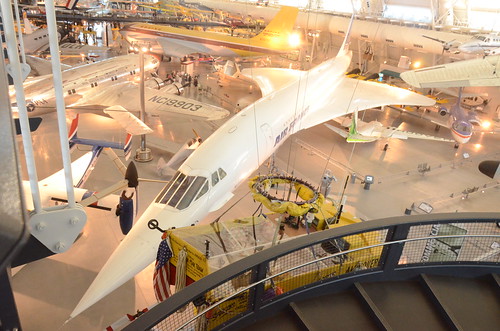
Steven F. Udvar-Hazy Center: Air France Concorde


Image by Chris Devers

Quoting Smithsonian National Air and Space Museum | Concorde, Fox Alpha, Air France:


The first supersonic airliner to enter service, the Concorde flew thousands of passengers across the Atlantic at twice the speed of sound for more than 25 years. Designed and constructed by Aérospatiale of France and the British Aviation Corporation, the graceful Concorde was a beautiful technological achievement that could not overcome severe economic issues.


In 1976 Air France and British Airways jointly inaugurated Concorde service to destinations about the globe. Carrying up to one hundred passengers in fantastic comfort, the Concorde catered to initial class passengers for whom speed was vital. It could cross the Atlantic in fewer than four hours – half the time of a conventional jet airliner. Nevertheless its high operating expenses resulted in very higher fares that restricted the quantity of passengers who could afford to fly it. These problems and a shrinking industry eventually forced the reduction of service till all Concordes were retired in 2003.


In 1989, Air France signed a letter of agreement to donate a Concorde to the National Air and Space Museum upon the aircraft’s retirement. On June 12, 2003, Air France honored that agreement, donating Concorde F-BVFA to the Museum upon the completion of its last flight. This aircraft was the 1st Air France Concorde to open service to Rio de Janeiro, Washington, D.C., and New York and had flown 17,824 hours.


Gift of Air France.


Manufacturer:
Societe Nationale Industrielle Aerospatiale
British Aircraft Corporation


Dimensions:

Wingspan: 25.56 m (83 ft 10 in)

Length: 61.66 m (202 ft three in)

Height: 11.3 m (37 ft 1 in)

Weight, empty: 79,265 kg (174,750 lb)

Weight, gross: 181,435 kg (400,000 lb)

Leading speed: two,179 km/h (1350 mph)

Engine: Four Rolls-Royce/SNECMA Olympus 593 Mk 602, 17,259 kg (38,050 lb) thrust every single

Manufacturer: Société Nationale Industrielle Aérospatiale, Paris, France, and British Aircraft Corporation, London, United Kingdom


Physical Description:

Aircaft Serial Number: 205. Such as 4 (four) engines, bearing respectively the serial quantity: CBE066, CBE062, CBE086 and CBE085.

Also included, aircraft plaque: &quotAIR FRANCE Lorsque viendra le jour d’exposer Concorde dans un musee, la Smithsonian Institution a dores et deja choisi, pour le Musee de l’Air et de l’Espace de Washington, un appariel portant le couleurs d’Air France.&quot


(Posted by an precision machining China Company and quality CNC machined parts China manufacturer and CNC machining services China supplier)

Friday, September 5, 2014

Lastest Cnc Machining Manufacturer News

What We Can Do About the Capabilities Gap

Quality Magazine: Skills such as becoming in a position to weld or tackle CNC machining call for substantial coaching. Are manufacturers hesitant to train current personnel on these tools? Bill Fetter: These capabilities are absolutely in demand and in some instances in …
Study a lot more on Good quality Magazine


Searching to the future of manufacturing

A: From sophisticated CNC capabilities to additive manufacturing to robotics and vision technologies, it"s really a extremely enjoyable time to preserve pushing the envelope. It is certainly fulfilling to see the most recent and greatest machine integration from our talented …
Read more on CT Post


Inside the Moto 360: Touring Motorola"s design labs

3D printing, laser-cut leather, and a complete suitcase complete of fake arms. The path to marketplace for the Moto 360 definitely wasn"t typical, as our behind-the-scenes photo tour of Motorola"s design and style and testing labs in its Chicago headquarters proved. Read on …
Read more on SlashGear


(Posted by an precision machining China Company and quality CNC machined parts China manufacturer and CNC machining services China supplier)

Friday, August 29, 2014

Lastest Turned Elements Manufacturer News

Koch 101: Some basics on the billionaire brothers

A: The Kochs inherited their father"s company in Kansas, and turned Wichita-based Koch Industries into the second-largest privately held company in the nation. The conglomerate tends to make a wide range of goods such as Dixie cups, chemicals, jet fuel,&nbsp…
Study much more on Hilton Head Island Packet


Direct Action in the UK to Help Palestine

The firm"s defense was that “components produced in the factory had been not exported for use in Israel,” an argument that Charlie Deas, one of the Elbit 9 speaking soon after the hearing, referred to as “bizarre,” offered that the business is Israeli owned. Speaking …
Read a lot more on NEWS JUNKIE POST


Implementing idling-reduction options to save income, meet regulations

Ranging from diesel engine styles to hybrids to battery-powered units, an APU is an onboard answer that includes small generators and climate handle components that are mounted to the truck and supply heating, cooling and 110v energy to drivers …
Study a lot more on Fleet Gear Magazine


(Posted by an precision machining China Company and quality CNC machined parts China manufacturer and CNC machining services China supplier)