Sunday, August 30, 2015

Nice Machining Manufacturer photos

Check out these machining manufacturer photos:


Image from web page 17 of “Scientific American Volume 85 Quantity 01 (July 1901)” (1901)


Image by World wide web Archive Book Images
Identifier: scientific-american-1901-07-06
Title: Scientific American Volume 85 Number 01 (July 1901)
Year: 1901 (1900s)
Authors:
Subjects: gas railroad munn cents steam companies american electric scientific american natural gas sheet metal sewing machine ten cents american supplement extended island soft coal cubic feet bituminous coal
Publisher:


View Book Web page: Book Viewer
About This Book: Catalog Entry
View All Pictures: All Pictures From Book


Click right here to view book online to see this illustration in context in a browseable on the internet version of this book.


Text Appearing Ahead of Image:
S OIL—SMELTER—MINES « DOUGLAS. LACEY&ampCO. ^ ItuiikerN, lir(»kerM, FImuI Ae^nt f Members N. V. Codsoli,luted St.H-k Kxcliaiine aud Los Angeles, ■W) fal. Stoi-k K.xfharifje. *? 68 BROADWAY and 17 NEW ST.. NEW YORK. ^ Divi«UMiiUi»Rying Mining, Oil and four^ Smelter Stocks^, U^ted aud Uu- &ltC^ lifted, Oiii Specialty. four^ Booklets providing our effective strategy for realizing ^ the massive it-ofits of legitimate mining. •i and ^ smelter investments, subscription blanks, complete Zi particulars, and so on., sent cost-free to any intereste* on ^ appltcatfon. ■♦f BUANtTlES-noston, Philadeliihia. Chicago. 4h rieveliind, Cincinnati, St. L«uis, Hartford and * New JIaveiL Conn. Prescott. Ariz.. Lus Angeles. *) Cal., St. .lohn, N. B., Montreal, Toronto, and ^ T.,oTi(loii. Eiigland. HOMER F. LIVERMORE MiGM grade: STEEL. MALLEABLE. GREY IRON,BRONZE, BRASS and ALUMINIUM CASTIWGS Sen.l Samples far Rates, Statiiif, Quantity Required.80 PEARL STREET. – – BOSTON, MASS.


Text Appearing After Image:
Potent, Itesijoiisive, Durable aud Effective. The ReevesVariable Speed Countershaft for securing any speed withoutchange of belt or loss of time. Es-pecially adapted for all types f)f Iron-witrking Machinery, Iron Lathes,IManei-s, Boiing Mills, Shapers. and so on.Cement, Machinery, ExperimentalMncbinery—in fact all kinds of ma-cliinery requiring a modify of s[ieetl.Witb it a lai^e increusc and a bettergrade tiE operate can be i&gtro«uced. ZJT Send for haiiilsomclii iUustrate^icatalogue N. A. free. REEVES PULLEY CO. COLUMBUS. IND., U. S. A. Acetylene Generators ARE Ideal. Over ten,000 Machines Sold. They are endorsed by each and every user. Send for costs. Handsomely illustrated catalogue.District Hepresentativea all overthe world. EAQLE GENERATOR COMPA^Y, 319 N. 4th Street.St. Louis, Mo.


Note About Photos
Please note that these photos are extracted from scanned page pictures that may have been digitally enhanced for readability – coloration and look of these illustrations may not perfectly resemble the original work.


Image from web page 17 of “Scientific American Volume 85 Number 01 (July 1901)” (1901)


Image by Web Archive Book Photos
Identifier: scientific-american-1901-07-06
Title: Scientific American Volume 85 Number 01 (July 1901)
Year: 1901 (1900s)
Authors:
Subjects: gas railroad munn cents steam companies american electric scientific american organic gas sheet metal sewing machine ten cents american supplement extended island soft coal cubic feet bituminous coal
Publisher:


View Book Web page: Book Viewer
About This Book: Catalog Entry
View All Images: All Photos From Book


Click right here to view book on the web to see this illustration in context in a browseable on-line version of this book.


Text Appearing Before Image:
The No. 4YOST WRITING MACHINE The distinctive attributes of the Yost Ma-chine, permanent alignment, direct inking,lovely function, strength, simplicity, anddurability are shown in perfection in theNo. 4 Model. YostWritinglYlachineCo. NEW YORK CITY. LONDON, ENQ.


Text Appearing Following Image:
S OIL—SMELTER—MINES « DOUGLAS. LACEY&ampCO. ^ ItuiikerN, lir(»kerM, FImuI Ae^nt f Members N. V. Codsoli,luted St.H-k Kxcliaiine aud Los Angeles, ■W) fal. Stoi-k K.xfharifje. *? 68 BROADWAY and 17 NEW ST.. NEW YORK. ^ Divi«UMiiUi»Rying Mining, Oil and 4^ Smelter Stocks^, U^ted aud Uu- &ltC^ lifted, Oiii Specialty. 4^ Booklets providing our effective plan for realizing ^ the huge it-ofits of reputable mining. •i and ^ smelter investments, subscription blanks, full Zi particulars, and so forth., sent cost-free to any intereste* on ^ appltcatfon. ■♦f BUANtTlES-noston, Philadeliihia. Chicago. 4h rieveliind, Cincinnati, St. L«uis, Hartford and * New JIaveiL Conn. Prescott. Ariz.. Lus Angeles. *) Cal., St. .lohn, N. B., Montreal, Toronto, and ^ T.,oTi(loii. Eiigland. HOMER F. LIVERMORE MiGM grade: STEEL. MALLEABLE. GREY IRON,BRONZE, BRASS and ALUMINIUM CASTIWGS Sen.l Samples far Prices, Statiiif, Quantity Needed.80 PEARL STREET. – – BOSTON, MASS.


Note About Pictures
Please note that these pictures are extracted from scanned page photos that may have been digitally enhanced for readability – coloration and look of these illustrations might not perfectly resemble the original perform.


Image from web page 17 of “Scientific American Volume 85 Quantity 01 (July 1901)” (1901)


Image by Web Archive Book Photos
Identifier: scientific-american-1901-07-06
Title: Scientific American Volume 85 Number 01 (July 1901)
Year: 1901 (1900s)
Authors:
Subjects: gas railroad munn cents steam companies american electric scientific american all-natural gas sheet metal sewing machine ten cents american supplement long island soft coal cubic feet bituminous coal
Publisher:


View Book Web page: Book Viewer
About This Book: Catalog Entry
View All Images: All Pictures From Book


Click right here to view book online to see this illustration in context in a browseable on the web version of this book.


Text Appearing Before Image:
LESGHEN &amp SONS ROPE Owners and ManufacturersLESCHEN CO.S PATENT AUTOMATIC AERIAL


Text Appearing Following Image:
(Ira-ie Mark littgistered.) WIRE ROPE TRAMWAY -^^^o?JrT^og.cWIRE ROPE We also manufacture all types of « KODAK 99 Stands for allthat is Very best inPhotography To the perfection of Kodakconstruction, to the perfec=tion of the Kodak mechan=ism, to the perfection ofthe Kodak lenses, is due the triumph of Kodakerp All Kodaks I^oail in Daylight with our TransparentFilm Cartriilfjes. A number of designs use either films •rplates. Sixty-4 page cataiofjiie, tiescribiiig themin detail, free at the Kodak dealers or by mail. EASTMAN KODAK CO. Rochester, N. Y. .jFSSOPS STEEL^BV/r J^ FOR TOOLS. SAWS And so on. WM JESSOP A SONS L5 91 JOHN ST. NEW YORK PETER T. AUSTEN CHEMICAL Expert. Testing, Ierfei-ting, Introducing and Disposing ofChemical Patents, Processes. Il-oducts, horinulas. and so forth. Utilization of Wastes and Unapjjlied Subsiances. Im-provement and Invention of Processes ami Iniducts.Reduction of Manufacturing Costs. E.^perinieiital In-vestieation of rocluiical Issues. Workitig out hor-mulas tor Manu


Note About Images
Please note that these photos are extracted from scanned web page pictures that may have been digitally enhanced for readability – coloration and look of these illustrations may not completely resemble the original operate.

Friday, August 28, 2015

Creating a Company Around Generative Design and style and Marvels of 3D Printing

Developing a Enterprise Around Generative Design and Marvels of 3D Printing

The rest of the shop location is really used for production. The laser cutter is utilised to generate the puzzles shown beneath. They&#39ve been down a pricey path of studying what this laser can and can&#39t do cutting the tight tolerances in the puzzles is …
Study a lot more on Hackaday


Sunrise Hitek is Now Supplying Digitally Die-Reduce Mousepads

Sunrise now also CNC-cuts their mousepads, enabling mousepads to be custom-cut to practically any shape. The material used consists of a 2mm sponge rubber backer with a white cloth best. The rubber back gives superb gripping energy that is anti-slip and&nbsp…
Study much more on PR Net (press release)


UK College of Design and style: Creating on a Foundation of Excellence in Innovation

Prototypes, 3-dimensional physical models, are developed with digital design and style and fabrication tools and technologies such as CNC milling, three-D printing and laser-cutting and enables students to propose solutions examine final results redefine issues and&nbsp…
Read far more on UKNow (press release)

Tuesday, August 25, 2015

Cool Prototype Manufacturing Firm pictures

Check out these prototype manufacturing organization photos:


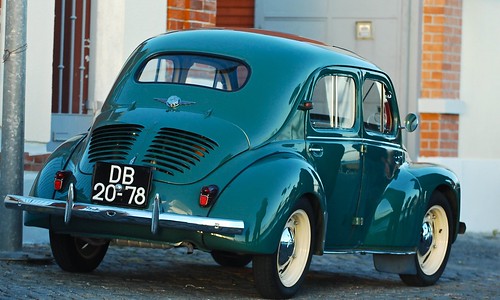
“Joaninha” (Renault four CV)


Image by pedrosimoes7

Oeiras, Portugal


in Wikipedia


The Renault 4CV is an economy vehicle created by the French manufacturer Renault from August 1947 to July 1961. As the first French automobile to sell over a million units, the 4CV was in the end superseded by the Renault Dauphine.


The 4CV was a four-door sedan of monocoque construction,[1] three.6 meters in length with rear suicide doors[three] and using Renault’s Ventoux engine in a rear-engine, rear-wheel drive layout.


The car’s name, 4CV, translates from the French for 4 cheveaux or 4 horse, especially four taxable horsepower.


To celebrate the fiftieth anniversary of the debut of the 4CV, in 1996 Renault presented a totally roadworthy concept car, the Renault Fiftie, with styling that recalled the 4CV, only in a two-door, mid-engine design and style.


Conception and history


The 4CV was originally conceived and designed covertly by Renault engineers throughout the German occupation of France in the course of Planet War II, when the manufacturer was under strict orders to design and create only industrial and military vehicles. A design group led by Fernand Picard, Charles-Edmond Serre and Jean-Auguste Riolfo envisioned a tiny, economical automobile appropriate for the economically tough years which would inevitably stick to the war.


The first prototype was completed in 1942 and two a lot more prototypes had been developed in the following 3 years. Pierre Lefaucheux tested the four CV prototype at Renault’s Herqueville estate.[four] The 4CV was ultimately presented to the public and media at the 1946 Paris Motor Show. The cars went on sale a year later.


In 1940 Louis Renault had directed his engineering team to &quotmake him a car like the Germans&quot. And until the arrangement was simplified in 1954, the 4CV featured a ‘dummy’ grill comprising six thin horizontal chrome strips, intended to distract focus from the similarity of the car’s all round architecture to that of the German Volkswagen,[1] whilst recalling the modern day designs of the fashionable front engined passenger vehicles produced in Detroit throughout the earlier 1940s.


An essential portion of the 4CV’s achievement, owes to the new methodologies employed in its manufacture, pioneered by Pierre Bézier. Bézier had begun his 42 year tenure at Renault as a Tool Setter, moving up to Tool Designer and then becoming head of the Tool Style Office. As Director of Production Engineering in 1949, he developed the transfer lines (or transfer machines) making most of the mechanical components for the 4CV.[5] The transfer machines were higher-functionality function tools designed to machine engine blocks. Even though imprisoned for the duration of WWII, Bézier created and enhanced on the automatic machine principle, introduced before the war by GM (Basic Motors). The new transfer station with several workstations and electromagnetic heads (antecedants to robots), enabled different operations on a single component to be consecutively performed by transferring the part from one particular station to another.


On the 4CV’s launch, it was nicknamed &quotLa motte de beurre&quot(the lump of butter) — due to the combination of its shape and the truth that early deliveries all utilized surplus paint from the German Army autos of Rommel’s Afrika-Corps, in a sand-yellow colour.[1] The 4CV was initially powered by a 760cc rear mounted four-cylinder engine coupled to a three-speed manual transmission. [7] In 1950 the 760cc unit was replaced by a 747cc version [7] of the &quotVentoux&quot engine creating 17 hp (13 kW).


In spite of an initial period of uncertainty and poor sales due to the ravaged state of the French economy, the 4CV had sold 37,000 units by mid-1949 and was the most well-known vehicle in France. The auto remained in production for much more than a decade afterwards. Claimed power output elevated subsequently to 21 hp (16 kW) as increased fuel octanes allowed for larger compression ratios, which along with the comparatively low weight of the vehicle (620 kg) enabled the companies to report an – 90 km/h (56 mph) time of 38 seconds and a prime speed barely beneath one hundred km/h (62 mph).[1] The engine was notable also for its elasticity, the second and prime gear both becoming usable for speeds between five km/h (three mph) and 100 km/h (62 mph): the absence of synchromesh on first gear would presumably have discouraged use of the bottom gear except when beginning from rest.


The rear mounting of the engine meant that the steering could be highly geared even though remaining reasonably light: in the early vehicles only 2¼ turns had been required from lock to lock.[1] The unusually direct steering no doubt delighted some keen drivers, but road tests of the time nonetheless included warnings to take great care with the car’s handling on wet roads.[1] In due course the makers switched from 1 intense to the other, and on later vehicles 4½ turns had been needed to turn the steering wheel from lock to lock.


The 4CV’s direct replacement was the Dauphine, launched in 1956, but the 4CV in fact remained in production until 1961. The 4CV was replaced by the Renault 4 which utilised the identical engine as the 4CV and sold for a similar cost.

Although most of the vehicles had been assembled at Renault’s Île Seguin plant located on an island in the river opposite Billancourt, the 4CV was also assembled in seven other countries, becoming Australia, Belgium, England, Ireland, Japan (where the Hino assembled examples gained a reputation for superior quality[1]), Spain and South Africa.[1] 1,105,543 vehicles were made the 4CV became the very first French vehicle to sell over a million.


The 4CV was easily modified and was utilized extensively as a racing auto. The 1st collaboration in between the Alpine business and Renault was the Alpine A-106 which was based on the 4CV. The partnership which would go on to win the Planet Rally Championship with the legendary Alpine A-110 in later years,


Renault four CV


Image by pedrosimoes7

Belem, Lisbon, Portugal


in Wikipedia


The Renault 4CV is an economy vehicle developed by the French manufacturer Renault from August 1947 to July 1961. As the very first French automobile to sell over a million units, the 4CV was eventually superseded by the Renault Dauphine.


The 4CV was a four-door sedan of monocoque construction,[1] 3.6 meters in length with rear suicide doors[3] and using Renault’s Ventoux engine in a rear-engine, rear-wheel drive layout.


The car’s name, 4CV, translates from the French for 4 cheveaux or 4 horse, particularly 4 taxable horsepower.


To celebrate the fiftieth anniversary of the debut of the 4CV, in 1996 Renault presented a totally roadworthy idea automobile, the Renault Fiftie, with styling that recalled the 4CV, only in a two-door, mid-engine style.


Conception and history


The 4CV was initially conceived and created covertly by Renault engineers for the duration of the German occupation of France for the duration of Planet War II, when the manufacturer was beneath strict orders to design and style and produce only commercial and military cars. A design and style team led by Fernand Picard, Charles-Edmond Serre and Jean-Auguste Riolfo envisioned a little, economical car appropriate for the economically difficult years which would inevitably adhere to the war.


The initial prototype was completed in 1942 and two far more prototypes had been created in the following three years. Pierre Lefaucheux tested the four CV prototype at Renault’s Herqueville estate.[4] The 4CV was ultimately presented to the public and media at the 1946 Paris Motor Show. The automobiles went on sale a year later.


In 1940 Louis Renault had directed his engineering team to &quotmake him a vehicle like the Germans&quot. And until the arrangement was simplified in 1954, the 4CV featured a ‘dummy’ grill comprising six thin horizontal chrome strips, intended to distract interest from the similarity of the car’s overall architecture to that of the German Volkswagen,[1] whilst recalling the modern designs of the fashionable front engined passenger vehicles developed in Detroit in the course of the earlier 1940s.


An important component of the 4CV’s accomplishment, owes to the new methodologies utilized in its manufacture, pioneered by Pierre Bézier. Bézier had begun his 42 year tenure at Renault as a Tool Setter, moving up to Tool Designer and then becoming head of the Tool Design and style Office. As Director of Production Engineering in 1949, he designed the transfer lines (or transfer machines) creating most of the mechanical components for the 4CV.[5] The transfer machines had been high-efficiency function tools developed to machine engine blocks. Although imprisoned throughout WWII, Bézier developed and enhanced on the automatic machine principle, introduced ahead of the war by GM (Common Motors). The new transfer station with numerous workstations and electromagnetic heads (antecedants to robots), enabled various operations on a single element to be consecutively performed by transferring the part from one particular station to one more.


On the 4CV’s launch, it was nicknamed &quotLa motte de beurre&quot(the lump of butter) — due to the mixture of its shape and the reality that early deliveries all utilised surplus paint from the German Army automobiles of Rommel’s Afrika-Corps, in a sand-yellow color.[1] The 4CV was initially powered by a 760cc rear mounted 4-cylinder engine coupled to a three-speed manual transmission. [7] In 1950 the 760cc unit was replaced by a 747cc version [7] of the &quotVentoux&quot engine creating 17 hp (13 kW).


Despite an initial period of uncertainty and poor sales due to the ravaged state of the French economy, the 4CV had sold 37,000 units by mid-1949 and was the most well-liked car in France. The auto remained in production for more than a decade afterwards. Claimed energy output improved subsequently to 21 hp (16 kW) as enhanced fuel octanes allowed for higher compression ratios, which along with the comparatively low weight of the auto (620 kg) enabled the producers to report an – 90 km/h (56 mph) time of 38 seconds and a prime speed barely under 100 km/h (62 mph).[1] The engine was notable also for its elasticity, the second and best gear each being usable for speeds in between 5 km/h (three mph) and 100 km/h (62 mph): the absence of synchromesh on first gear would presumably have discouraged use of the bottom gear except when starting from rest.


The rear mounting of the engine meant that the steering could be very geared while remaining comparatively light: in the early automobiles only 2¼ turns have been needed from lock to lock.[1] The unusually direct steering no doubt delighted some keen drivers, but road tests of the time nonetheless integrated warnings to take wonderful care with the car’s handling on wet roads.[1] In due course the makers switched from 1 intense to the other, and on later vehicles 4½ turns were necessary to turn the steering wheel from lock to lock.


The 4CV’s direct replacement was the Dauphine, launched in 1956, but the 4CV in truth remained in production till 1961. The 4CV was replaced by the Renault 4 which utilized the identical engine as the 4CV and sold for a related value.

Although most of the cars were assembled at Renault’s Île Seguin plant positioned on an island in the river opposite Billancourt, the 4CV was also assembled in seven other countries, becoming Australia, Belgium, England, Ireland, Japan (where the Hino assembled examples gained a reputation for superior good quality[1]), Spain and South Africa.[1] 1,105,543 cars have been created the 4CV became the first French automobile to sell over a million.


The 4CV was effortlessly modified and was employed extensively as a racing vehicle. The very first collaboration amongst the Alpine organization and Renault was the Alpine A-106 which was primarily based on the 4CV. The partnership which would go on to win the Globe Rally Championship with the legendary Alpine A-110 in later years,

Monday, August 24, 2015

Image from web page 542 of "Electrical news and engineering" (1891)

Some cool electrical discharge grinding images:


Image from page 542 of “Electrical news and engineering” (1891)


Image by Web Archive Book Pictures
Identifier: electricalnewsen31donm
Title: Electrical news and engineering
Year: 1891 (1890s)
Authors:
Subjects: Electrical engineering
Publisher: Don Mills, Ont. [etc.] Southam-Maclean Publications
Contributing Library: Engineering – University of Toronto
Digitizing Sponsor: University of Toronto


View Book Page: Book Viewer
About This Book: Catalog Entry
View All Pictures: All Images From Book


Click right here to view book on-line to see this illustration in context in a browseable on the internet version of this book.


Text Appearing Prior to Image:
the energy losses of distribution by maintaining down a leakagefrom the conductor to the insulator pin. The clamps aremade of malleable iron, galvanized by the hot dipping pro-cess. Each halves are alike and interchangeable. The manu-facturers claim that these clamps will not break the glass,as there is but 1 bolt and the covering of the conductor re-ceives the stress that may possibly outcome from unequal expansion. Direct-Current Lightning ArresterA direct existing electrolytic lightning arrester, for volt-age applications up to three,800 volts has been lately devel-oped by the Westinghouse Electric &amp Manufacturing Com-pany. The device contains one to twelve cells and is de-signed for car or station use on railway, energy and lightingcircuits. The building embodies two aluminum platesimmersed in a suitable inorganic electrolyte and supportedfrom a porcelain cover clamped by a zinc ring to a glass jar


Text Appearing After Image:
with a gasket placed bctvvcLii the porcelain cover and theglass jar. Hollow concentric cylinders produced from sheet aluminumform the plates, the outer cylinder or plate getting punched andupset at frequent intervals in order to allow free of charge circulation of the electrolyte inside the cell. Balancing resistors areused with arresters of a lot more than one particular cell. The arrestersare floated between the line and ground, so that a leakagecurrent of only a handful of milliamperes passes continually. Thisleakage current serves to preserve the film upon the aluminumplate or plates in proper order. The device is capalble ofpassing a surge present of roughly 1000 amp. at doublenormal voltage when the arrester is functioning and onearrester must be used for each .500 kw. of feeder bus, rotaryconverter or motor-generator capacity to which the arresteris connected. Any voltage in excess of normal line voltageis discharged promptly by means of the arrester. The arrestersare mounted and securely held in asbestos board and w


Note About Images
Please note that these images are extracted from scanned page pictures that may have been digitally enhanced for readability – coloration and look of these illustrations may possibly not perfectly resemble the original perform.


Image from page 33 of “Electrical planet” (1883)


Image by Web Archive Book Images
Identifier: electricalworld43newy
Title: Electrical planet
Year: 1883 (1880s)
Authors:
Subjects: Electrical engineering
Publisher: [New York McGraw-Hill Pub. Co., etc.]
Contributing Library: Engineering – University of Toronto
Digitizing Sponsor: University of Toronto


View Book Page: Book Viewer
About This Book: Catalog Entry
View All Photos: All Images From Book


Click here to view book online to see this illustration in context in a browseable on the web version of this book.


Text Appearing Ahead of Image:
ft. in length, it ha- boonanchored at the center of each and every side of the boiler home. A double 20 40 60 80 100 vcys it to any essential point. This is in the nature of a travelingcrane, and its character can be readily understood from Fig. ten. Theashes are discharged in the basement into a pocket of a capacity of28 cu. ft., which travels on an overhead trolley. From this the ashesare dumped into a skip, which elevates them to the ash bin, fromwhich they iie automatically discharged into automobiles as preferred. .All ofthe machinery is operated by direct-existing motors. The coal-hand-ling and ash-conveying systems had been de&gtigned by Heyl and Patter-son, of Pittsburg. Boiler residence No. i in its common attributes is comparable to the onealready described. This includes 16 Cahall boilers, which are pro-vided with grates and gas fired. Coal is utilized whenever the blastfurnace gas is of an inferior quality. Boiler home No. three, which is.south of the pumping station, is 65 . 184 ft. in size. This will con-


Text Appearing Right after Image:
Unl^adtnq Machine-^ ^~^ v s^~nJ: Fig. 5.—Section By means of Ore Dock and Blast Furnaces. bend is provided in each line, connecting a battery with the mainheader to take care of expansion. A really lengthy elbow is provided ateach boiler, which, by closing two valves located in between the headerand the former, can be completely removed to permit the removal oftubes. A monitor in two halves of a bigger diameter than the boileris bolted to the roof more than every. This can be entirely removed forrepairs of what ever nature, and also serves as a ventilator. Allsteam valves 12 in. long or bigger are by-passed. Drips under oper-ating situations are exposed, and eight-in. cast-iron pipe is utilized forblow-offs in the ground -leading to the sewers. Compressed air is tain 32 Cahall boilers gas fired, and will furnish steam to several en-gines in the Bessemer rail mill. As already stated, each and every pair of blast furnaces will have its ownpower home, containing an gear of gas engines for drivingblower engi


Note About Pictures
Please note that these photos are extracted from scanned web page photos that might have been digitally enhanced for readability – coloration and appearance of these illustrations may not perfectly resemble the original function.


Image from web page 377 of “Journal of electricity, power, and gas” (1899)


Image by Web Archive Book Pictures
Identifier: journalofele323271914paci
Title: Journal of electrical energy, power, and gas
Year: 1899 (1890s)
Authors: Pacific Coast Electric Transmission Association
Subjects: Electrical engineering Electrical energy Gas manufacture and performs
Publisher: San Francisco : Technical Pub. Co.
Contributing Library: San Francisco Public Library
Digitizing Sponsor: California State Library Califa/LSTA Grant


View Book Page: Book Viewer
About This Book: Catalog Entry
View All Pictures: All Photos From Book


Click right here to view book online to see this illustration in context in a browseable on-line version of this book.


Text Appearing Before Image:


Text Appearing Right after Image:
_■. w.-.rti2najii&gtfe^ j«,£5&ltaitaMBMH Towers at Tiny Falls Showing Rock Anchorages. beneath the supervision of an inspector employed by thepurchaser, who kept a close supervision of the work-manship and produced frequent tests on samples selectedby him. A single of the 50 ft. towers was erected at thecontractors operates for inspection and to prove the cor-rectness of the style was subjected to all the stressesprovided for in the specifications. Ground Wires. Two ground wires are supplied and they are at-tached both mechanically and electrically to the topof the towers. Each ground wire consists of a ^ in.diam., seven strand Siemens-Martin steel cable hav-ing an ultimate strength of about 9000 lb. and anelastic limit of 5500 lb. These ground wires are pro-vided to afford protection from lightning discharges.No matter whether they do or do not furnish this protection theauthor is unable to state, from his personal encounter,but believes that they do. A lot of engineers claim thatowing to the ground wires


Note About Images
Please note that these images are extracted from scanned web page pictures that could have been digitally enhanced for readability – coloration and appearance of these illustrations may possibly not completely resemble the original function.

Sunday, August 23, 2015

Cool Surface Grinding images

Verify out these surface grinding images:


Concrete Wall and Spots


Image by shaire productions

By Sherrie Thai of ShaireProductions. Really feel free of charge to download and use these as a background for commercial or noncommercial projects. If you determine to use them, please let me know how it goes by sending a link or an image. Enjoy!

Skilled trades on the rise, in demand

Skilled trades on the rise, in demand

As the owner of Precision Welding and Repair LLC in Berrien Springs, Voth does some mechanical perform and welding on farm gear. In the final couple of years, he has begun to notice a increasing issue, which a lot of economic analysts have also noticed.
Study a lot more on Herald Palladium


Concert review: Brian Wilson returns to Atlanta with pristine classics

Wilson&#39s longtime touring band – with the exception of Jardine&#39s son, Matt, taking more than the upper variety vocals so expertly delivered by the irreplaceable Jeffrey Foskett for many years – is an airtight unit that delivers these nicely-worn chestnuts with …
Read far more on Atlanta Journal Constitution (blog)

Saturday, August 22, 2015

Nice Cnc Milling Turning images

A couple of nice cnc milling turning pictures I identified:


MC68HC908GP32 motor controller


Image by Mitchclanky2008

The 1st pcb i created and contribuited to the develop of – hand soldered vias! This was produced on a CNC milling machine rather than being acid etched as JCU does not have the facilities. It worked with some minor modifications (a track cut and a capacitor soldered directly to the cut track). The green LED shown was attached to a programmable output of the micro, which is why its not on in this photo. Hooked into a board (which i dont have a photo of) which had two pots, one of which was controlled by a motor – the aim being to handle the motor to match the pots to any turned worth.


Take my Lightning but Do not Steal my Thunder – Covent Garden


Image by Dave Pearce (London)

This surreal stunt is the operate of 30-year-old artist Alex Chinneck, master of architectural illusion, who has previously turned buildings upside down, pulled off their facades, and let them slither down in a heap on the pavement. A Uri Geller of bricks and mortar, this is 1 of his most ambitious works but, fabricating an imaginary eastern entrance to the industry hall that he’s then torn in half and jacked aloft, its Portland stone columns and granite walls left brutally severed.


“I wanted to play on the theatricality of this location, and make anything physically extraordinary,” he says. In location for the subsequent 3 weeks, it is already attracting crowds of gawping passers-by, as a visually arresting a single-liner, seemingly produced for the Instagram era.


The illusion of weightlessness is created achievable by a lot of polystyrene and 16 tonnes of steel. A 12-metre armature hidden inside the structure is connected to the ground by way of an innocuous market cart, in which a six-tonne counterweight stops it all from toppling more than. The effect of weathered stonework has been immaculately recreated by Richard Nutbourne and his group of scenic artists – who usually function on stage sets for the opera and ballet subsequent door. Covering the CNC-milled polystyrene blocks with plaster and granite sand, they have mimicked the neighbouring gnarled stone even down to the detail of moss, electrostatically flocked onto the surface.


“My perform is generally quite easy in its idea,” says Chinneck, “but it is a nightmare in execution.” Eight months in the producing, the Covent Garden installation is the product of a 100-strong team of architects and engineers, carpenters and set-builders, and much more than 500 hours of digital carving. It follows preceding commissions in the piazza from Jeff Koons and Damien Hirst, Banksy and Sam Taylor-Johnson.